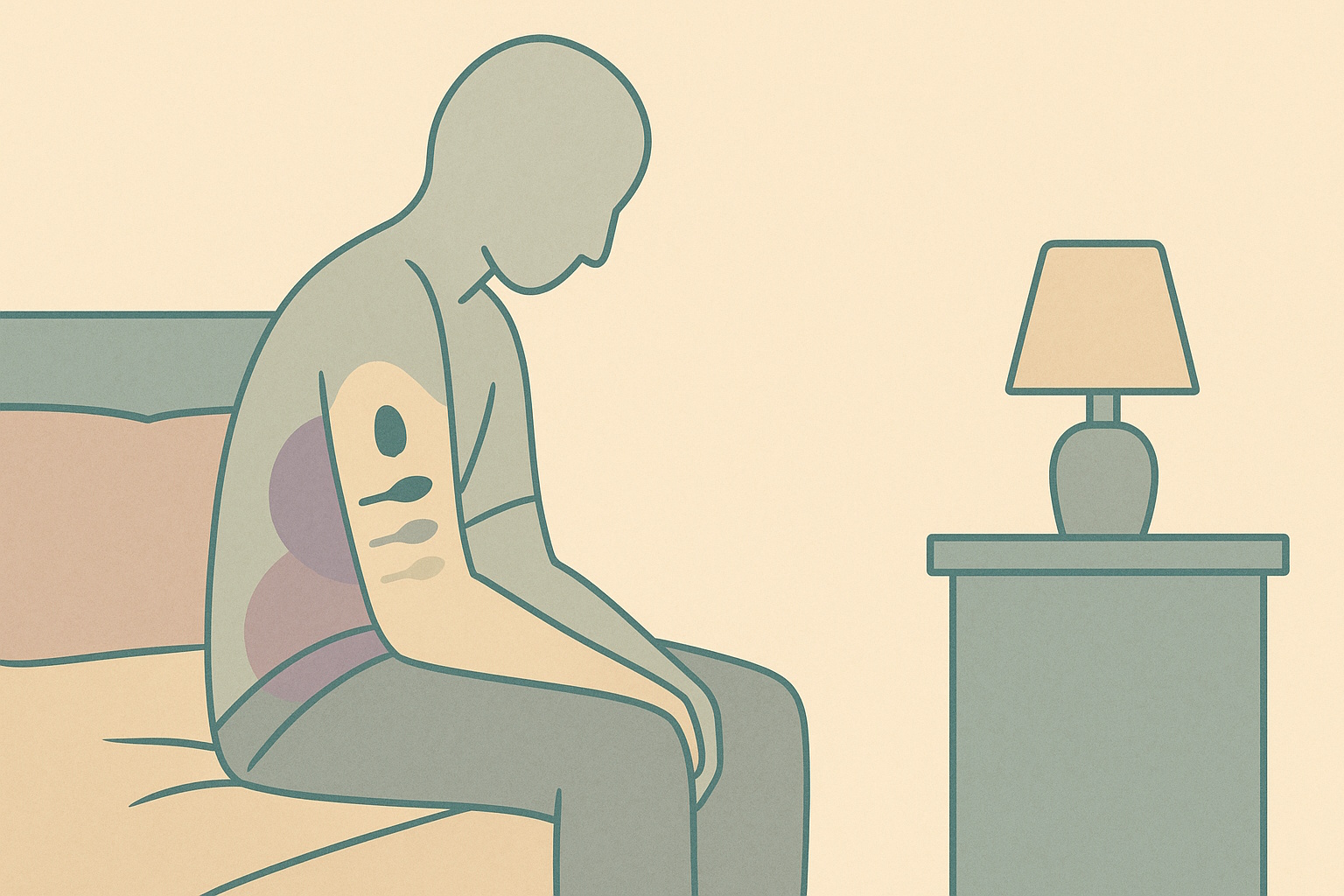
When Time Off Isn’t Restful: Neurodivergent Brains and Unstructured Days
Someone tells you that you’ve earned a rest. Maybe it’s a holiday, a long weekend, a period of enforced leave, or simply a Saturday with nothing in the diary. No meetings. No deadlines. Nowhere you have to be.
For most people, that sounds like a gift.
For a lot of neurodivergent people, it sounds — quietly, guiltily — like a problem.
Not because you don’t want rest. You do. You’re exhausted, probably. But the absence of structure doesn’t feel like freedom. It feels like standing in a room where all the walls have been removed, and you’re not entirely sure which direction is forward anymore.
This article is about why unstructured time can be so disorienting for neurodivergent brains, why “time off” doesn’t always translate into actual rest, and what gentle scaffolding can look like when you need support without pressure.
Summary
Unstructured time — holidays, weekends, days with nothing in the diary — can feel more exhausting than a working day for many neurodivergent people. This isn’t a failure of gratitude or an inability to relax. It’s a real difference in how neurodivergent brains use structure to function.
This article covers:
- Why the absence of structure is effortful rather than freeing, and what executive function has to do with it
- Why time off can surface burnout rather than relieve it
- What spoon theory explains about arriving at rest already depleted
- What gentle scaffolding looks like — anchor points, low-pressure intentions, honest rest — without turning a day off into another performance
- How to get through low-spoon days without making them worse with self-criticism
- Why the guilt so many of us carry about not resting “correctly” is a symptom of the wrong standard, not evidence of a personal failing
If you only have the energy for one section, the one on low-spoon days and the one on gentle scaffolding are probably the most immediately useful.
Why unstructured time feels different when you’re neurodivergent
Most advice about rest assumes that the removal of demands is itself restorative. Stop doing things, and recovery happens automatically. And for many people, that’s broadly true.
But for a lot of neurodivergent people — particularly those with autism, ADHD, or both — structure isn’t just an external imposition. It’s load-bearing. It tells you what comes next. It removes the need to generate momentum from scratch, to decide between options, to locate yourself in time. When structure disappears, all of that work doesn’t disappear with it. It just becomes invisible and self-generated, which is often considerably harder.
Executive function — the set of cognitive processes that lets you plan, initiate, switch between tasks, and regulate your attention — tends to work differently in neurodivergent brains. One of the things it’s responsible for is getting started. Not just on difficult or unpleasant tasks, but on any task, including ones you actually want to do. Structure scaffolds this. It gives your brain an external cue: now this, then that. Without it, even things you’re looking forward to can sit undone while the day evaporates and you can’t quite explain where it went.
Add to this the way many neurodivergent people relate to time more broadly. If you’ve ever been told you’re “time blind” — that you struggle to feel time passing, to judge how long things will take, or to hold a future commitment as real until it’s almost upon you — then an unscheduled day can be peculiarly difficult to inhabit. It’s not just long. It’s shapeless. There are no natural reference points, no transitions, no markers to orient yourself by. Just an undifferentiated stretch of hours that somehow both drags and vanishes without you quite living in it.
None of this means you’re doing rest wrong. It means your nervous system is doing what it does, and “just relax” isn’t a strategy.
Why it can actually be more draining than work
This is the part that’s genuinely hard to explain to people who don’t experience it.
On paper, a day off is lighter than a working day. Less demanded of you, fewer obligations, no performance required. And yet you might finish a holiday weekend feeling more depleted than you were on Friday afternoon. More irritable. More foggy. Less like yourself.
Part of this is the effort of self-regulation without external support. At work, the day has shape. You know roughly what’s expected and when. Even if work is stressful — and it often is — that shape does some of the cognitive work for you. On an unstructured day, you have to provide all of that yourself. What am I doing now? Is this how I should be spending this time? Have I been sitting here too long? Should I be doing something more useful? Something more restful? Something more — and the question trails off because you can’t quite locate the answer.
There’s also the question of autistic and ADHD burnout specifically — which is distinct from general tiredness, and distinct from the kind of work-related burnout that gets written about in mainstream productivity articles. Neurodivergent burnout is what can happen after extended periods of masking, of operating in environments not designed for your nervous system, of effortfully managing social demands, sensory overload, and executive function challenges simultaneously. It accumulates. And when time off finally arrives, it doesn’t switch off. It surfaces.
Which means the holiday you’ve been looking forward to might be the moment when the burnout you’ve been holding at arm’s length finally catches up with you. Not because the holiday caused it. Because you finally stopped moving fast enough for it to find you.
The rest you needed was real. The fact that resting feels so hard doesn’t mean you’re not actually exhausted. It might mean you’re more exhausted than you realised.
Spoons, and why you might have fewer of them than you think
If you’ve come across spoon theory before, you’ll know the framework: spoons as a metaphor for the finite energy available to manage daily life, with different activities costing different amounts depending on your nervous system, your health, and what else you’ve already absorbed that day.
For neurodivergent people, the baseline cost of existing in a world not designed for your brain is often higher than it looks from the outside — and higher than you might account for yourself, particularly if you’ve spent years getting very good at appearing fine.
What this means in practice is that you may arrive at your days off already low on spoons. Not dramatically depleted — you might not feel dramatically anything — but quietly running close to empty in a way that makes even low-effort activities feel effortful. Getting out of bed. Deciding what to eat. Answering a message. Things that look, from the outside, like nothing at all.
An unstructured day doesn’t top up your spoons. It just removes some of the demands on them — which is useful, but only if you’re actually resting rather than spending your freed-up energy on anxiety about whether you’re resting correctly.
What gentle scaffolding actually looks like
The instinct, when structure is absent, is sometimes to compensate by creating a very full schedule. If I plan every hour, I can’t get lost in the day. This can work for some people, sometimes. But it can also turn a day off into a performance of productivity that’s just as tiring as work, and considerably more disappointing when you inevitably don’t complete it.
What tends to work better — for most neurodivergent people, most of the time — is something lighter than a schedule and more substantial than nothing. Anchor points rather than a timetable.
An anchor point is a fixed, low-demand moment in the day that gives the day shape without constraining it. It might be a cup of tea at the same time each morning. A short walk after lunch. A podcast while you cook something in the early evening. It doesn’t have to be significant. Its purpose is structural rather than productive — it divides the day into segments and gives your brain something to orient around.
Some people find it helpful to set a very small number of intentions for a day off rather than a to-do list. Not “I will do X, Y and Z,” but “I’d like to do one of these three things at some point today” — and then letting the day carry you toward whichever one feels most possible when the time comes. This preserves some agency and forward movement without the all-or-nothing weight of a plan you can fail.
It’s also worth being honest with yourself about what actually restores you, as opposed to what you think should restore you. Spending the afternoon reading sounds peaceful. If you spend it anxiously reading the same paragraph seventeen times because your attention is scattered and the silence feels too loud, it isn’t particularly restful. Some neurodivergent people rest better with background noise. Some rest better with something absorbing on a screen. Some need physical movement before stillness becomes possible. None of these are inferior forms of rest. They’re just your forms of rest, and they’re worth taking seriously.
Low-spoon days, and how not to make them worse
There will be days — on holiday, at weekends, in the middle of extended leave — when the spoons simply aren’t there. When getting dressed feels like more than you can manage, when nothing sounds appealing, when the distance between where you are and anywhere you could be doing anything feels infinite.
These days are not evidence that something has gone wrong. They are evidence that your nervous system needed more than it had, and that this is what genuine depletion looks like when it finally has somewhere safe to land.
The most common way neurodivergent people make low-spoon days worse is by layering self-criticism on top of them. I should be enjoying this. I’m wasting the time I’ve been given. Other people would make something of this day. I’m lazy. I’m failing at rest. And so the day — which was already difficult — becomes difficult and shameful, which costs more than the original difficulty did.
This is worth naming clearly: a day spent doing very little, or nothing, or less than you intended, is not a wasted day if your nervous system needed it. Recovery is not the same as productivity. A body and brain that is genuinely exhausted requires something different from a body and brain that is simply bored, and they don’t always look different from the outside — including from your own inside, when you’re in the middle of it.
Being gentle with yourself on a low-spoon day doesn’t mean pretending it’s fine or that you’re enjoying it. It might not be fine. You might not be enjoying it. But adding self-attack to the experience doesn’t accelerate recovery. It just adds more to recover from.
A few things that can help
There’s no universal solution here, and anything that presents itself as one is probably not written for you specifically. But these are things that tend to reduce the difficulty of unstructured time for a lot of neurodivergent people, and are worth trying in some form.
Keep some low-demand anchor points in place. You don’t need a schedule. But having one or two fixed points in the day — a consistent time you get up, a regular meal, something you do at roughly the same time each afternoon — gives the day enough shape to be inhabitable.
Give yourself permission to do less than you planned. If you planned three things and managed one, the one thing you managed is the thing that happened. It counts. Adjusting expectations mid-day is not failure. It’s accurate reading of your current capacity.
Notice what you’re actually drawn to, not what sounds like the right thing to be drawn to. If you’d genuinely rather watch something absorbing than attempt a walk, that preference contains information about what your nervous system needs right now. It’s worth listening to, rather than overriding.
Protect transitions. Moving from one mode to another — from sleep to waking, from rest to activity, from being alone to being with people — can be harder for neurodivergent brains than it looks like it should be. Building in a little buffer around transitions, rather than expecting them to be immediate, can reduce the friction considerably.
Lower the threshold for what counts as a good day. On a low-spoon day, a good day might be: got dressed, ate something, didn’t feel terrible the whole time. This is not a low bar in the context of genuine exhaustion. It’s an honest one.
On guilt, and what it’s actually telling you
A lot of neurodivergent people carry a persistent, low-level guilt about not making the most of free time. Not being productive enough. Not being sociable enough. Not being rested enough, or rested in the right way. Not enjoying the holiday as much as they were supposed to.
This guilt is worth interrogating, because it rarely has much to do with what you actually did or didn’t do. It tends to be a symptom of years of measuring yourself against a standard that wasn’t built around your nervous system, and finding yourself consistently a few steps behind.
The standard is wrong. Not you.
Time off doesn’t have to be spent optimally. It doesn’t have to produce anything, or restore you to full functionality, or look like the kind of rest that other people seem to manage with apparent ease. It just has to be yours — structured loosely enough to hold you, gentle enough to let your nervous system do what it needs to, and honest enough about the fact that rest, for a neurodivergent brain, is often its own kind of work.
You’re allowed to find this hard
If you came to this article because time off feels harder than it should, and you were hoping someone would tell you why: it’s not because you’re bad at relaxing. It’s not because you’re too anxious, or too wired, or too stuck in your ways. It’s because your brain genuinely navigates unstructured time differently, and that difference has a cost that’s almost never acknowledged.
The world is very good at telling neurodivergent people that rest is simple. Stop doing. Be still. Recover.
It is less good at acknowledging that the scaffolding most people take for granted — external structure, natural time anchors, an automatic sense of what comes next — is something neurodivergent people often have to build deliberately, and that this building is itself a form of effort.
You’re not doing it wrong. You’re doing it with a nervous system that makes it harder, in a world that doesn’t make much room for that.
Finding it difficult is entirely reasonable. Being gentle with yourself about that difficulty is, genuinely, one of the most useful things you can do.

I’m Andrew, the person behind Quietly Neurodivergent. I’m an autistic adult who spent many years trying to pass as “fine” – holding things together at work, showing up to meetings, hitting deadlines – and then unravelling in private. I know what it feels like to look competent on the outside while running on fumes underneath.
By day I work with student data in higher education; by night (and very early mornings) I’m a part-time PhD student thinking about education, inequality and how people move through systems that were never quite built for them. I’ve also spent nearly ten years as a town councillor and I volunteer as a Beaver Scout Leader, which means I’ve had a lot of practice navigating meetings, forms, responsibilities and sensory/social overload at the same time. That mix of lived experience, community work and research shapes how I write here: practical, plain-English pieces that sit somewhere between “this is what it’s like” and “here are some things you could try”.
I’m not a clinician and I don’t offer diagnosis, therapy or miracle fixes. What I can offer are honest accounts of what has and hasn’t helped me with study, work and everyday life, alongside small, realistic tools you can adapt for yourself. If you recognise yourself in the phrase “quietly neurodivergent”, this site is for you.
Discover more from Quietly Neurodivergent
Subscribe to get the latest posts sent to your email.