
Category: Study & Exams

Support for neurodiverse students from secondary school upwards: revising in ways that actually stick, surviving long lessons and lectures, managing coursework and deadlines, and dealing with school/college/university systems. Grounded in real experience, not generic study tips.

Illustration of a calm classroom. A teacher stands at the front, and several students sit at desks. One student near the back is quiet and focused, with soft abstract shapes around their head hinting at hidden mental effort.

Supporting Quietly Neurodivergent Students: A Guide for Teachers and Lecturers

Quietly neurodivergent students are often the ones teachers and lecturers never worry about. They’re present, polite, and doing well on paper – but may be masking hard and running on empty. This guide offers practical, low-drama ways to redesign teaching and respond more gently, without putting anyone under a spotlight.

Read More
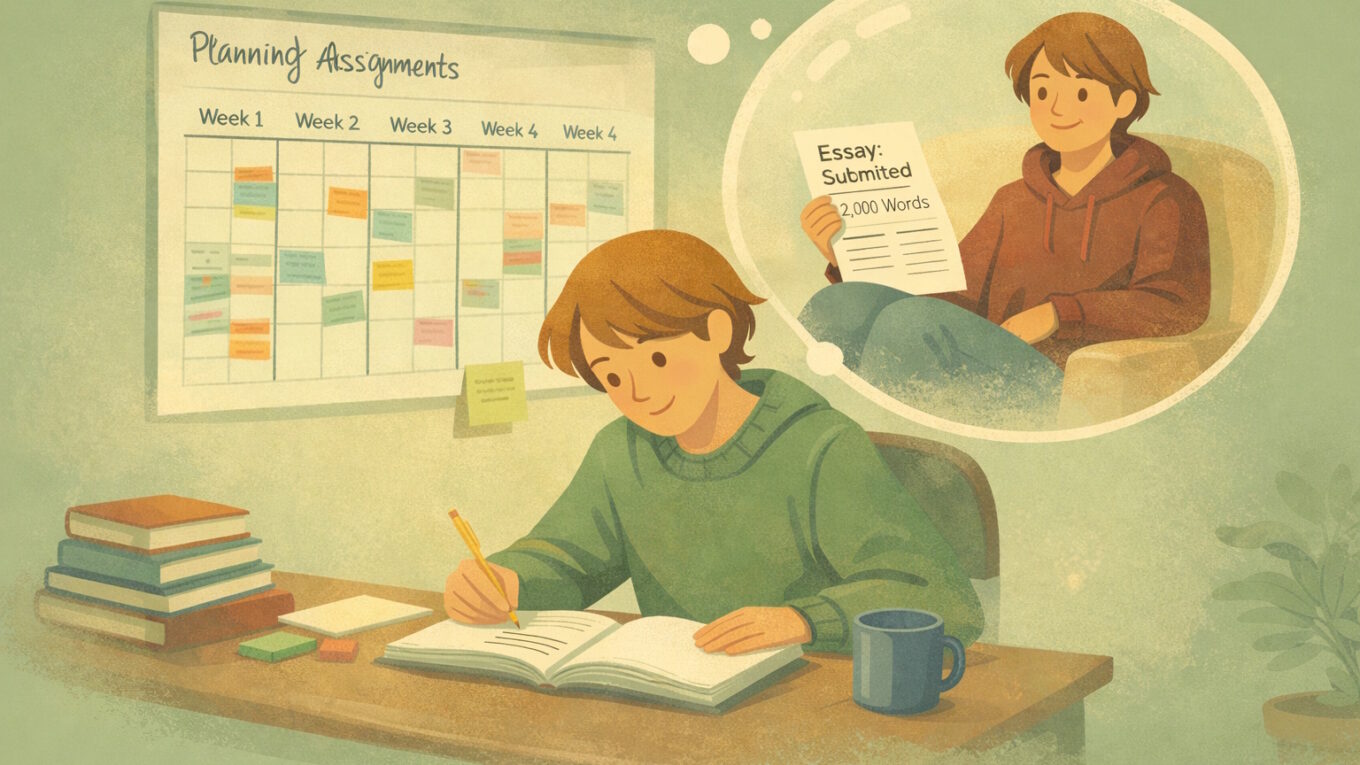

Student planning assignments at a desk with a colour-coded 4-week calendar, imagining their future self happily holding a submitted essay.

Planning Assignments When You’re Time Blind: A Step-by-Step Guide

Planning assignments when you’re time blind isn’t about suddenly becoming a perfectly organised student. It’s about turning one vague, overwhelming essay into small, visible steps that your brain can actually work with. This guide walks through a real example, then offers 4-week and 1-week templates you can reuse to give “future you” fewer last-minute crises.

Read More
Neurodivergent Time Blindness

Planning With Time Blindness: A Neurodivergent Guide

Time blindness isn’t about not caring; it’s about time feeling slippery, even when you want to be organised. In this article I share how planning actually works for me as an autistic adult juggling work, part-time PhD study, family life and volunteering, and offer small, realistic tools to make deadlines, projects and weekday mornings a little less chaotic.

Read More
Studying When Your Brain Won’t Start

Studying When Your Brain Won’t Start

Many autistic and ADHD students care deeply about their work but still feel unable to start. Drawing on my own experience of working full time, studying part time and raising a family, this article explains why studying can feel impossible and offers tiny, realistic ways to move forward without expecting a perfect student brain.

Read More