Supporting a Quietly Neurodivergent Child Without Pushing Them Past Breaking Point
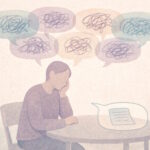
Some children stand out as obviously different from an early age. Others move quietly under the radar. They get good marks, rarely cause trouble and are often described as “no problem” by school. Then they come home and fall apart. That was me when I was a child.
If you’re caring for a child who seems to cope all day and then crashes in the evening – crying, shutting down, melting down, refusing homework, hiding in their room – you may be wondering what you’re doing wrong.
You’re probably not doing anything wrong at all. You may be caring for a quietly neurodivergent child: autistic, ADHD, AuDHD or similar, whose difficulties are real but easy for other people to miss.
This article is for parents and carers who want to support that child without pushing them past breaking point.
Summary
- Quietly neurodivergent children often mask at school and in public, then crash at home where it finally feels safe enough to let go.
- From the outside they may look capable and easy-going, which can make their struggles and exhaustion at home confusing – for you and for them.
- Practical support usually means protecting decompression time after school, keeping expectations realistic for homework and activities, and working with school to reduce unnecessary load.
- Punishing shutdowns or after-school meltdowns as “rudeness” or “defiance” often makes things worse. They are usually signs of overload, not bad character.
- You cannot remove every difficulty your child will face, but you can make home a place where they are believed, understood and not constantly pushed past their limits.
Quietly neurodivergent kids versus the “obvious” picture
Many people still carry a very narrow image of what autism or ADHD looks like in a child: constant movement, obvious social struggles, disruptive behaviour, maybe very visible special interests. Some children fit that picture. Many don’t, I know I certainly didn’t.
A quietly neurodivergent child might:
- appear shy, polite or reserved at school
- be very good at copying what other children do, even if they don’t fully understand why
- get on with their work and rarely draw attention to themselves
- be described by teachers as “no trouble” or “a pleasure to teach”
- come home and suddenly be tearful, clingy, irritable, explosive or completely shut down
Because they are doing well on paper, adults around them can easily assume they are fine. It may be only the people at home who see how much effort that “fine” costs.
If that’s your situation, you are not imagining things. Your child’s struggle is real, even if it only shows up behind closed doors.
Masking, school and the after-school crash
Many neurodivergent children learn very early that certain behaviours are praised and others are not. They work hard to sit still, follow instructions, join in at the right moments, laugh when others laugh and hide signs of distress.
That effort is called masking. It can keep them safe, and sometimes it helps them get through environments that aren’t designed for their needs. But it comes at a cost.
During the school day your child might be:
- trying to tune out sensory overload from noise, lights, smells and movement
- monitoring other children’s reactions so they know when to laugh or speak
- trying to understand rapid instructions and changes of plan
- holding in stims, tears, or requests for help because they don’t want to stand out
By home time, their internal battery may be far beyond empty. Home is often the only place where it feels safe enough to stop holding everything in.
From the outside, that can look like they are reserving their worst behaviour for you. In reality, they have simply run out of capacity to keep the mask on.
Homework, clubs and the social overload problem
On top of school itself, there is often homework, clubs and social expectations. For a quietly neurodivergent child who has masked all day, those extra demands can be the thing that tips them into overload.
You might notice that:
- homework that should take ten minutes stretches into tears, refusals and arguments
- a child who copes at school melts down when asked to go to a club or activity in the evening
- weekends feel like a fragile balance between rest and “keeping up” with everyone else
It is easy to slide into thinking, “They’re just being lazy,” or “They could do it if they really tried.” Teachers’ comments about them being bright and capable may feed that story.
A more accurate story for many quietly neurodivergent children is:
- they are putting enormous effort into coping at school
- by the time they get home, there is very little left for homework, clubs or extra socialising
- when they refuse or explode, it is often because they are overwhelmed, not because they do not care
This doesn’t mean you have to abandon all expectations. It does mean that expectations may need to be adjusted to match their actual capacity, not what looks reasonable from the outside.
Practical ideas that may help
Every child and every family is different. Please treat this section as a menu, not a checklist.
Protect decompression time after school
For many quietly neurodivergent children, what happens in the first hour after school makes a big difference to the rest of the evening.
Decompression might look like:
- quiet time alone in their room or a favourite spot
- a familiar TV show, game or activity that doesn’t demand lots of new decisions
- a snack and a chance to change out of school clothes
- gentle sensory comfort – soft blankets, cuddly toys, favourite music at a low volume
You might find it helps to agree that, unless something is truly urgent, there are no big questions, chores or homework discussions in that first hour. The goal is to let their nervous system settle.
Rethink homework expectations
If homework regularly leads to tears or shutdowns, it may be time to think about what is realistically sustainable.
Some families find it helpful to:
- set a reasonable time limit and accept what gets done in that time
- prioritise core tasks and let go of non-essential extras
- create a simple, predictable homework routine on days when your child has enough energy, and skip it on days when they clearly don’t
In some cases, it may be worth talking to school about adjusting homework expectations. Many teachers would rather reduce homework than see a child regularly pushed into meltdown.
Choose activities carefully
Clubs and activities can be great for social contact and skills, but they also add extra sensory and social load.
It can help to:
- think about how many organised activities your child can realistically manage in a week
- choose clubs that align with their interests, rather than ones they feel they “should” do
- consider clubs or organisations that can give an appropriate structure to the activities – for example, Scouts or Guides are good for this
- build in rest before and after busy activities
It is okay if your child does fewer activities than other children. Protecting their energy is not failing them.
Talk to school if you can
If you suspect your child is quietly neurodivergent, or you know they are, it can be useful to share that with school – at least with a trusted teacher or SENCo.
You might describe what you see at home and say something like:
“They seem to cope at school, but when they get home they are exhausted and often melt down. I think they may be masking during the day. Can we talk about how to make things a bit easier for them?”
Possible changes might include:
- a quieter place to go at break times
- clearer instructions and written reminders
- advance warning of changes to routine
- reduced homework or flexibility around deadlines
Not every school will respond perfectly, but some may be more understanding than you expect. Even small adjustments can help.
When shutdowns and meltdowns are misread as “rudeness”
It is understandable to feel upset or rejected when your child shouts, slams doors, refuses to speak or seems to push you away. Many of us were raised with the message that these behaviours are simply rude and need to be stamped out.
For a quietly neurodivergent child, meltdown or shutdown is usually not a calculated choice. It is a sign that their system is overwhelmed.
- A meltdown might look like shouting, crying, throwing things or lashing out.
- A shutdown might look like going silent, hiding, staring at a screen, or seeming to disappear into themselves.
Punishing these states as bad behaviour tends to add shame on top of overload. Children may learn to hide their distress more deeply, or to believe that needing recovery time makes them a bad person.
That doesn’t mean you have to let everyone be unsafe. You can still set boundaries, for example: “I’m not going to let you hit,” or “We can be angry, but we don’t throw things at people.” The key is to target the behaviour that causes harm, not the feelings or the need for recovery that sit underneath it.
Afterwards, when things are calmer, you might gently name what you think happened: “It looked like everything got too much and your brain crashed. What can we do next time to help you feel safer sooner?”
Looking after yourself as a parent or carer
Supporting a quietly neurodivergent child can be beautiful and exhausting at the same time. You may feel caught between school’s picture of an easy child and your own experience of evenings full of tears, arguments or silence.
It’s okay if you:
- feel angry or sad that things are harder than you expected
- grieve the idea of a simpler school or family life
- feel torn between wanting to protect your child and wanting them to keep up with their peers
You are allowed to have needs as well. Looking after yourself might mean:
- seeking support from other parents or carers, online or in person
- asking friends or family for practical help so you can take a break
- taking small moments in the day that are just for you – even if it’s only a quiet cup of tea
You don’t have to be endlessly patient or cheerful to be a good parent. Being willing to learn alongside your child, and to adjust when something clearly isn’t working, is already a lot.
A gentle closing note
Quietly neurodivergent children often grow up believing they must hold everything together in public and save their distress for behind closed doors. When they come home and crash, it is often because they finally feel safe enough to stop pretending.
If that’s your child, you have already done something important. You have given them a place where they can let the mask slip.
You won’t always get it right. No parent does. But if you can keep protecting their decompression time, keep adjusting expectations to their real energy, keep listening when they say “it’s too much”, and keep resisting the urge to label their overload as rudeness, you are giving them something many of us never had.
You cannot remove every difficulty they will face. You can, however, make home a place where they are believed and supported, and where they do not have to break to be taken seriously.

I’m Andrew, the person behind Quietly Neurodivergent. I’m an autistic adult who spent many years trying to pass as “fine” – holding things together at work, showing up to meetings, hitting deadlines – and then unravelling in private. I know what it feels like to look competent on the outside while running on fumes underneath.
By day I work with student data in higher education; by night (and very early mornings) I’m a part-time PhD student thinking about education, inequality and how people move through systems that were never quite built for them. I’ve also spent nearly ten years as a town councillor and I volunteer as a Beaver Scout Leader, which means I’ve had a lot of practice navigating meetings, forms, responsibilities and sensory/social overload at the same time. That mix of lived experience, community work and research shapes how I write here: practical, plain-English pieces that sit somewhere between “this is what it’s like” and “here are some things you could try”.
I’m not a clinician and I don’t offer diagnosis, therapy or miracle fixes. What I can offer are honest accounts of what has and hasn’t helped me with study, work and everyday life, alongside small, realistic tools you can adapt for yourself. If you recognise yourself in the phrase “quietly neurodivergent”, this site is for you.