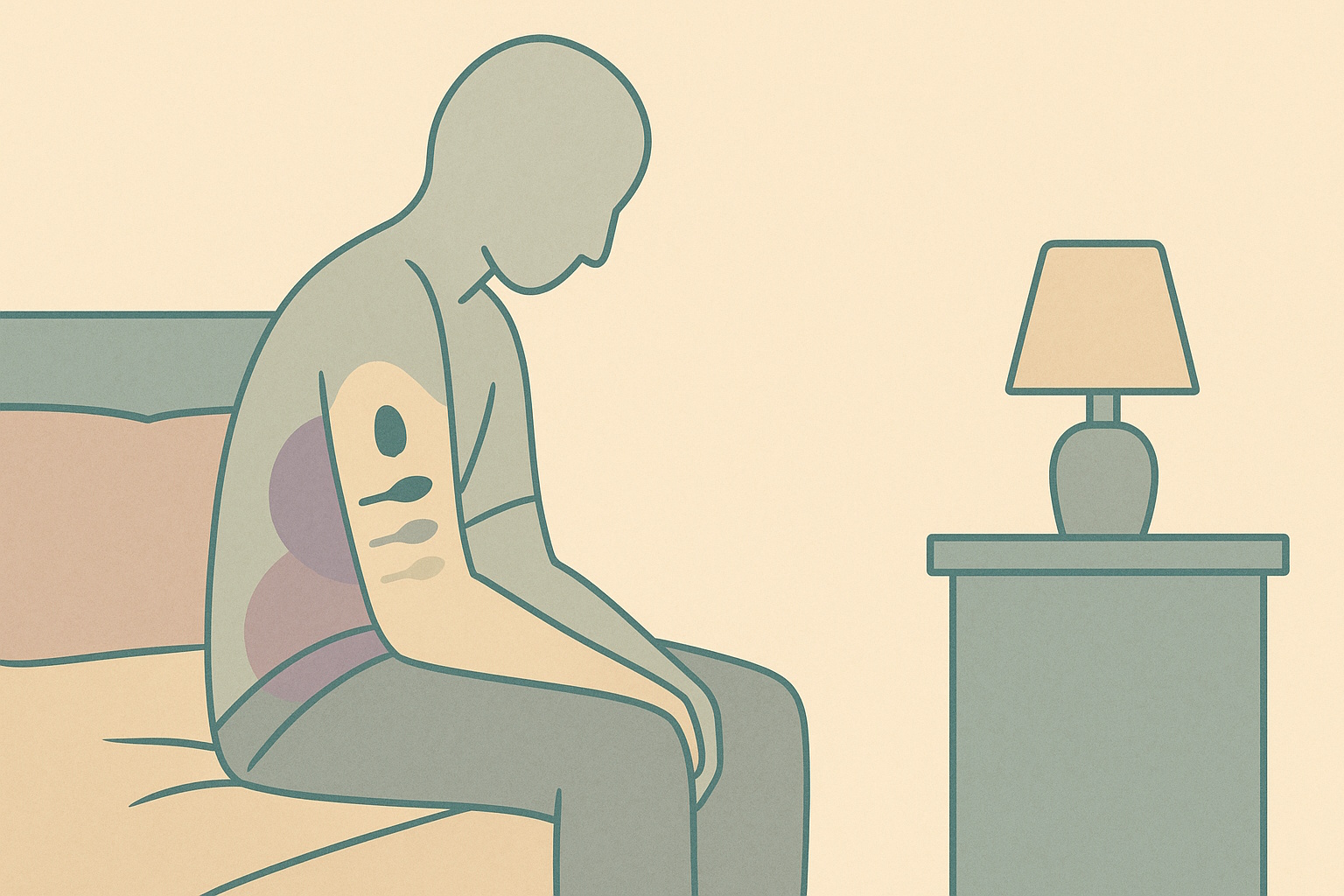
What Is Spoon Theory? A Guide for Neurodivergent People and Those Around Them
There is a good chance you have heard the word “spoons” used in a way that has nothing to do with cutlery. Someone mentions they are “out of spoons”. A friend says they only had three spoons today. A post in an online community talks about “spoon management” as though it is a serious life skill — because, for many people, it genuinely is.
Spoon theory started in a completely different community but has been widely adopted by autistic and ADHD people because it describes something real that previously had no good name. This article explains where it came from, what it means in a neurodivergent context, and how it can be useful — both if you are neurodivergent yourself and if you are trying to understand someone in your life who is.
Quick Summary
- Spoon theory was created by Christine Miserandino in 2003 to describe living with a chronic illness, using spoons as a metaphor for limited daily energy.
- It has since been widely adopted by autistic and ADHD people to describe the way executive function, masking, sensory load, and other demands drain capacity throughout the day.
- Not everyone starts the day with the same number of spoons, and not everyone uses them up at the same rate.
- Understanding spoon theory can help neurodivergent people plan more realistically, reduce self-blame, and communicate their needs more clearly.
- For people around neurodivergent individuals, it can offer a concrete way of understanding why someone’s capacity varies so much from day to day.
Where Spoon Theory Came From
Spoon theory was not originally about neurodivergence. It was created by Christine Miserandino, an American writer and activist living with lupus, a chronic autoimmune condition. In 2003, she wrote an essay describing a conversation she had with a friend in a diner. Her friend asked what it was really like to live with lupus, not the medical facts, but the daily experience of it.
Miserandino picked up a handful of spoons from nearby tables and handed them to her friend. She told her that the spoons represented the energy available to her for that day. Every task (getting out of bed, showering, getting dressed, making breakfast) cost a spoon. Once they were gone, they were gone. Unlike a healthy person, she could not simply push through and find more.
The essay, which she published on her website But You Don’t Look Sick, spread quickly through chronic illness and disability communities. People recognised their own experience in it. The language gave them something they had been missing: a concrete, communicable way to explain what variable energy actually feels like to people who had never experienced it.
The term “spoonie” emerged from this same community, a word people with chronic illness and disability began using to describe themselves, which has since been adopted across neurodivergent spaces as well.
How Neurodivergent Communities Adopted It
Spoon theory migrated into autistic and ADHD communities because the underlying experience (having a limited and unpredictable energy budget) resonated deeply, even though the cause was different.
For autistic and ADHD people, the things that drain spoons are often invisible to others. They include:
- Masking, the effort of suppressing or moderating your natural behaviours in order to appear more “normal” in social situations: constantly watching yourself, copying others, and keeping parts of yourself out of sight.
- Sensory load, the effort your brain puts into processing the world around you. Loud noises, bright lights, strong smells, scratchy fabrics, or any input that feels like too much. For many autistic and ADHD people, this work happens constantly and uses up energy even when nothing seems obviously difficult.
- Executive function demands, the brain work involved in getting things started, staying organised, switching between tasks, managing time, and making decisions. For many autistic and ADHD people, this takes considerably more effort than it appears to from the outside. Starting a simple task can feel genuinely difficult even when you know exactly what needs doing.
- Social interaction, even enjoyable social contact, can be draining when your brain has to work harder to process it.
- Emotional regulation, managing feelings that can arrive suddenly, intensely, or feel much bigger than the situation seems to call for. Many autistic and ADHD people do not have the same automatic emotional buffer that other people experience. Feelings hit harder and can be harder to settle.
None of these are visible. From the outside, an autistic person sitting in a busy open-plan office looks the same at 9am as they do at 3pm. Inside, the spoon count may have collapsed entirely.
This is one reason spoon theory has been so valuable in neurodivergent communities. It is not just a metaphor. It is a translation tool.
What Makes Neurodivergent Spoon Use Different
There are a few ways that spoon use for autistic and ADHD people differs from the chronic illness context in which the theory originated, and it is worth being honest about these.
The starting number varies enormously. For someone with a chronic condition, the baseline might be consistently low. For an autistic or ADHD person, it can vary wildly. A good night’s sleep after a quiet day might mean starting with ten spoons; a poor night after a week of heavy masking might mean starting with two, or effectively borrowing from the next day before it has even begun.
Some tasks cost more depending on context. Cooking dinner on a quiet evening at home might cost one spoon. Cooking the same meal after a long day of masking in a noisy workplace, while the kids are asking questions and a headache is building, might cost five. The task is the same. The context is not.
Recovery is not always predictable. Many neurodivergent people find that rest does not restore spoons in the way you might expect. Sleep can help, but it does not always reset the counter. A period of autistic or ADHD burnout (prolonged, accumulated spoon depletion) can take weeks or months to recover from, not one good night’s sleep.
Spoon use is often invisible to the person themselves. One of the features of autism and ADHD is that it is not always easy to notice, in the moment, how much energy you are using. You may not realise you are running low until you are suddenly out — and by then you are already past the point where you could have made different choices. This is one reason why checking in with yourself deliberately, rather than waiting to feel bad, is worth building into your day. It is a skill, and like most skills, it takes practice.
Why the Language Matters
You might wonder whether any of this is really necessary. Energy is energy. Everyone gets tired. Why does it need a theory and a metaphor?
For neurodivergent people, the answer is usually this: because without language for it, the default explanation is a personal failing.
When you cannot get off the sofa after a busy week, and you have no framework for understanding why, the internal narrative tends to go somewhere like: I am lazy. I am weak. Everyone else manages. What is wrong with me?
Spoon theory does not fix the exhaustion. But it offers a different interpretation. It says: you are not weak. You had a limited number of spoons, you used them, and now they are gone. That is not a moral failing. It is a resource question.
This shift (from self-blame to resource awareness) can make a practical difference. It changes the question from “why can’t I cope?” to “how do I manage what I have?” That second question is much more useful.
Spoon Theory for People Around Neurodivergent Individuals
If you are reading this because someone in your life (a partner, child, friend, or colleague) has mentioned spoons, this section is for you.
The most important thing to understand is that when a neurodivergent person says they are out of spoons, they are not being dramatic, making excuses, or choosing not to do something. They are describing a genuine state of depletion that is as real as physical exhaustion, even if it is not always visible.
A few things that can help:
Take it at face value. If someone says they have no spoons left, believe them. Asking them to push through, or suggesting they will feel better once they get started, is rarely helpful and can feel dismissive of something they have found difficult to articulate.
Understand that it changes day to day. A neurodivergent person who managed a busy social event last month is not being inconsistent if they cannot manage a quiet dinner tonight. Spoon availability fluctuates. It is not about willingness.
Ask, rather than assume. “How are your spoons today?” is a genuinely useful question in a household or relationship where the language has been established. It invites honesty without requiring a long explanation.
Recognise the invisible work. Much of what drains neurodivergent spoons (masking, sensory load, executive function demands) happens out of sight. The fact that it is not visible does not mean it is not real or costly.
Practical Ways to Use Spoon Theory
Understanding the theory is one thing. Using it day to day is another. A few practical applications:
A morning spoon check. Before the day properly begins, ask yourself roughly how many spoons you are starting with. Not a precise number, just a rough sense. If a full day is ten spoons and you are starting with four, that is useful information. It can shape what you commit to, what you ask for help with, and what you let slide.
Spoon budgeting. If you know a particular event or week is going to cost a lot (a work presentation, a family gathering, a long commute), you can protect spoons in advance. This might mean keeping the days around it quieter, saying no to other demands, or building in recovery time afterwards.
Communication. Spoon language can make it easier to communicate needs without having to explain everything from scratch every time. “I’m low on spoons today” is a shorthand that, once established with the people around you, can replace a much longer and more exhausting conversation.
Reducing spoon waste. Some things drain spoons without much return. Identifying your personal high-cost, low-value activities (certain social obligations, particular environments, tasks that can be automated or delegated) and reducing them where possible is a legitimate and sensible strategy.
A Note on Burnout
Spoon theory is useful for understanding individual days. But it is also relevant to a larger pattern: autistic and ADHD burnout.
Burnout happens when spoons are consistently overspent, when low-spoon days stop being occasional and become the norm. When you spend more energy than you recover, day after day, the deficit builds. Autistic and ADHD burnout is not the same as ordinary tiredness. It can mean a significant and sometimes sudden loss of the ability to do things that previously felt manageable, alongside deep exhaustion, withdrawal, and emotional flatness. It can take weeks or months to recover from, not a good night’s sleep.
If you recognise this pattern in yourself, it is worth taking seriously. Spoon theory is not just a daily management tool. It is an argument for building a life in which your energy is spent more sustainably, not in ways that impress other people, but in ways that keep you going.
A Quiet Closing Thought
Spoon theory is, at its heart, a simple idea: energy is finite, costs vary, and that is nobody’s fault.
For neurodivergent people, having language for this can be quietly transformative. It does not change the reality of limited capacity, but it changes the story you tell yourself about it. And that story matters more than it might seem.
If you have spent years wondering why you find things harder than other people seem to, spoon theory will not answer every question. But it might offer something useful: a frame in which your limits are not a personal failing, but a fact of your particular neurology, one that deserves to be managed thoughtfully, not punished.
If you found this article useful, you might also want to read our guide to Low Spoon Days: Tiny Tools and Routines for When You Have No Energy.

I’m Andrew, the person behind Quietly Neurodivergent. I’m an autistic adult who spent many years trying to pass as “fine” – holding things together at work, showing up to meetings, hitting deadlines – and then unravelling in private. I know what it feels like to look competent on the outside while running on fumes underneath.
By day I work with student data in higher education; by night (and very early mornings) I’m a part-time PhD student thinking about education, inequality and how people move through systems that were never quite built for them. I’ve also spent nearly ten years as a town councillor and I volunteer as a Beaver Scout Leader, which means I’ve had a lot of practice navigating meetings, forms, responsibilities and sensory/social overload at the same time. That mix of lived experience, community work and research shapes how I write here: practical, plain-English pieces that sit somewhere between “this is what it’s like” and “here are some things you could try”.
I’m not a clinician and I don’t offer diagnosis, therapy or miracle fixes. What I can offer are honest accounts of what has and hasn’t helped me with study, work and everyday life, alongside small, realistic tools you can adapt for yourself. If you recognise yourself in the phrase “quietly neurodivergent”, this site is for you.
Discover more from Quietly Neurodivergent
Subscribe to get the latest posts sent to your email.