
Small Fidgets and Comfort Objects for Neurodivergent Brains in Meetings
You sit down in a meeting and your body immediately wants to move. Your leg bounces. Your fingers twist the lid of your pen. Your brain feels like a browser with too many tabs open, and sitting perfectly still makes it worse, not better.
At the same time, you may have a running commentary in your head:
- “I should stop fidgeting, it looks unprofessional.”
- “If I get my fidget toy out, people will think I’m not paying attention.”
- “Why can’t I just sit like everyone else?”
If you recognise yourself in any of that, you’re not alone. For many autistic and ADHD people, movement, fidgets and small comfort objects are not a quirky extra – they are tools for self‑regulation and focus. The trouble is that most workplaces were not designed with this in mind.
This article looks at how small, quiet fidgets and comfort objects can help in meetings, how to choose ones that work for you and your environment, and how to handle the social side when people don’t quite understand.
Summary
- Fidgeting is often a self‑regulation strategy, not a sign of boredom or disrespect. Keeping your hands busy can make it easier to listen and think.
- Small, silent and discreet tools – from purpose‑made fidgets to pens, pebbles or fabric – can help you stay grounded in meetings without drawing unwanted attention.
- It’s usually worth choosing tools that don’t click, flash or squeak, and that are easy to keep in a pocket or bag so you’re not caught without them.
- If someone asks whether you’re paying attention, simple phrases like “I concentrate better if my hands are busy” can help explain what’s going on without oversharing.
- Earplugs or noise‑reducing earbuds can also help in noisy environments, but they should reduce sound, not block it completely, and they’re not appropriate when driving, cycling or in safety‑critical situations. You still need to be able to hear what is being said.
- What works for one neurodivergent person won’t work for everyone. Treat this as a menu of ideas to experiment with, not a prescription.
Why fidgeting can actually help you focus
Many of us grew up with the message that sitting still equals paying attention. For a lot of neurodivergent people, the opposite is closer to the truth.
Fidgeting can:
- give your body just enough movement so your brain can focus on listening
- release some of the nervous energy that builds up in long meetings
- provide a predictable, soothing sensation when everything else feels overwhelming
- stop your mind from spiralling off into anxiety by anchoring your attention in something small and concrete
If you’ve ever found that squeezing something soft like putty under the table helps you follow a complex discussion, or that twirling a pen keeps you from zoning out, your nervous system is probably using movement as a support.
This doesn’t mean every kind of fidget is automatically helpful. Noisy, flashy or large objects can distract both you and everyone else. The key is finding tools that work for your body and fit your environment.
Types of fidgets and comfort objects that might help
Everyone’s sensory profile is different, so there’s no single perfect option. It can take some gentle trial and error.
Small, purpose‑made fidgets
These are items designed specifically for fiddling with:
- tiny, silent clickers or rollers you can use one‑handed
- smooth rings or spinning rings you can wear
- soft silicone or rubber fidgets you can squeeze or stretch
- small “worry stones” made of stone, wood or resin
If you like predictability, having a few of these in a pocket, pencil case or bag can feel reassuring. The important things to look for are:
- noise level – can you use it without clicking, rattling or thudding on the table?
- size – does it fit in your hand or pocket without being obvious?
- texture – does it feel comforting rather than irritating after two minutes?
Everyday “makeshift” fidgets
You might already be using these without naming them:
- pens or pencils to spin, tap or roll between your fingers
- paperclips or elastic bands to bend
- a sleeve hem, watch strap or lanyard to twist
- the edge of a notebook or a soft keyring
These can be easier to use in formal settings, because they look ordinary. The main risk is noise – repetitive pen clicking will usually irritate people fast. If you know you tend to do that, it might be worth switching to a pen that doesn’t click, or using a different object altogether.
Comfort objects you can hold
Not every helpful object has to be “fidgety” in the classic sense. Sometimes just holding something familiar can make meetings more bearable:
- a smooth pebble or shell in your pocket
- a small piece of fabric, like a scarf or soft handkerchief
- a subtle piece of jewellery with a texture you like
These are often useful if you want grounding and comfort more than movement. You might find it easier to focus when you can feel something solid and familiar in your hand or against your skin.
Ear‑based tools in noisy spaces
This site already has a separate article on ear protection, but it’s worth mentioning briefly here because for some people, ear‑based tools are part of their meeting kit.
Noise‑reducing earplugs or earbuds can:
- lower the overall volume of background chatter
- make it easier to focus on the person speaking
- take the edge off harsh sounds without blocking everything
The key point is noise reduction, not total silence. For example, some earplugs reduce sound by around 20–30 decibels. You can still hear voices and important sounds; they’re just less overwhelming.
There are important safety limits here:
- don’t use noise‑blocking headphones or earbuds when driving, cycling or operating anything where hearing clearly is important
- be cautious in situations where you need to respond quickly to alarms, instructions or changes around you
In many ordinary meeting rooms, though, quiet, unobtrusive earplugs or noise‑reducing earbuds can be a legitimate way to make the environment more manageable.
A lot of people picture big, over‑ear defenders when they think about neurodivergent people and noise. Television and film has been good at promoting this stereotype. Those can be useful in some settings, but many of us, including myself, prefer small, in‑ear plugs that look more like ordinary earbuds. These are more discreet and often more comfortable, while still reducing the volume enough to make meetings bearable.
Personal examples (not sponsored)
These aren’t ads or affiliate links – just two types I personally use and find helpful. They may not suit everyone, but they might give you a starting point if you’re staring at a long list of options.Always check the safety information and think about your own environment before using any kind of ear protection, especially if you need to respond quickly to alarms, traffic or instructions.
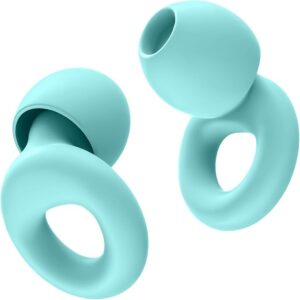
Ear Plugs for Noise Reduction–Super Soft, Reusable Hearing Protection in Flexible Silicone for Sleep, Noise Sensitivity & Flights
I use these because they are soft, comfortable, and discreet. They come in a little pouch – whilst I prefer a hard case this may be something you like.
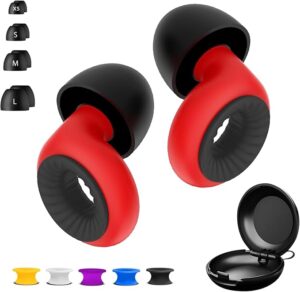
Reusable Ear Plugs for Sleep – Noise Cancelling, Snoring, Travel, and Concerts
These are my 'go to' pair of ear plugs. They are soft, comfortable, discreet but also come with a small storage case.
There are plenty of near-identical items available on Amazon and other online vendors; these are the ones I purchased for myself to use and ended up buying several times due to never being able to remember to take them with me. I keep a pair wherever I can to make sure I always have some available to me.
There are also branded options you might see others mention online – small, circular in-ear plugs designed to be worn all day. I haven’t personally used these, so I can’t recommend a specific brand, but they sit in the same general category: low-profile, in-ear plugs that reduce volume rather than blocking all sound.
Choosing quiet, unobtrusive options
If you worry about drawing attention to yourself in meetings, you’re not alone. A lot of us want the benefits of fidgets without feeling like we’ve put a spotlight on our own difference.
Some questions that can help you choose:
- Is it silent? If you used this under the table for half an hour, would anyone hear it? I once had a so-called ‘silent’ fidget spinner which I could barely hear, but my colleague several metres away in the office was wondering if there was something up with my laptop fan.
- Is it visually subtle? Does it blend in with work clothes or stationery instead of flashing or lighting up?
- Can you use it without looking at it? Being able to fiddle by feel makes it easier to stay present in the room.
- Is it easy to carry? If you know you often forget things, having a few spares (in a bag, desk drawer, coat pocket) can save you from being caught without one.
It can be helpful to think in terms of “stealth mode”: if someone walked past the meeting room, would they even notice what you were doing with your hands? If the answer is no, you’re probably fine.
Dealing with “Are you paying attention?” and other questions
Even with the quietest fidget, there may be moments when someone notices and comments. That can feel exposing, especially if you’ve spent years being told off for fidgeting.
You don’t owe anyone your full medical history in a meeting. A simple, confident explanation is usually enough.
Some options:
- “I actually listen better if my hands are busy, so this helps me concentrate.”
- “This keeps me grounded so I can focus on what you’re saying.”
- “It’s a focus aid – I’m following along, don’t worry.”
If you feel comfortable being a bit more open, you might add:
- “My brain’s a bit neurodivergent – this helps me manage the sensory side of meetings.”
You can also set boundaries if someone keeps pushing:
- “I’m engaged in the meeting and this helps me stay that way. I’d rather keep using it.”
If you’re a manager reading this, it can help to remember that fidgeting or using a small object is not usually a sign of disrespect. Often, it’s what’s letting that person stay present in the room at all.
If you know that fidgets or ear‑based tools are part of how you work, it can sometimes help to mention them in a short neurodiversity statement or an access‑needs note at work. For example, you might write that you “concentrate best when using small, quiet fidgets or earplugs in busy environments”. That way, when people see you using them in meetings, they’re not surprised – they already know this is part of how you stay engaged.
Where fidgets aren’t the right tool
There are times and places where fidgets or ear‑based tools are not suitable, even if they help you elsewhere.
It’s usually not a good idea to use them:
- while driving or cycling
- when operating machinery or doing any safety‑critical work
- in situations where you need both hands and full awareness of your surroundings
- when they will clearly distract someone who needs to concentrate on something complex or risky
Sometimes the most supportive thing you can do for yourself is to choose a different strategy in those contexts: planning breaks, adjusting the environment where possible, or asking for support from someone you trust.
A gentle closing note
If you are someone who has always been told to “sit still” and “stop fidgeting”, it can feel strange to treat fidgets and comfort objects as legitimate tools rather than childish habits.
But if small, quiet movements or familiar objects help your neurodivergent brain stay regulated in meetings, that is worth taking seriously. You are not being difficult or unprofessional for needing them. You are finding ways to work with the brain you actually have.
You don’t have to announce your fidgets to everyone, and you don’t have to justify them in detail. With a bit of experimentation, you can build a small, discreet toolkit that makes long meetings less harsh – so you have more energy left for the parts of your life that matter most.

I’m Andrew, the person behind Quietly Neurodivergent. I’m an autistic adult who spent many years trying to pass as “fine” – holding things together at work, showing up to meetings, hitting deadlines – and then unravelling in private. I know what it feels like to look competent on the outside while running on fumes underneath.
By day I work with student data in higher education; by night (and very early mornings) I’m a part-time PhD student thinking about education, inequality and how people move through systems that were never quite built for them. I’ve also spent nearly ten years as a town councillor and I volunteer as a Beaver Scout Leader, which means I’ve had a lot of practice navigating meetings, forms, responsibilities and sensory/social overload at the same time. That mix of lived experience, community work and research shapes how I write here: practical, plain-English pieces that sit somewhere between “this is what it’s like” and “here are some things you could try”.
I’m not a clinician and I don’t offer diagnosis, therapy or miracle fixes. What I can offer are honest accounts of what has and hasn’t helped me with study, work and everyday life, alongside small, realistic tools you can adapt for yourself. If you recognise yourself in the phrase “quietly neurodivergent”, this site is for you.