Masking, Burnout, and Quietly Falling Apart When You Get Home
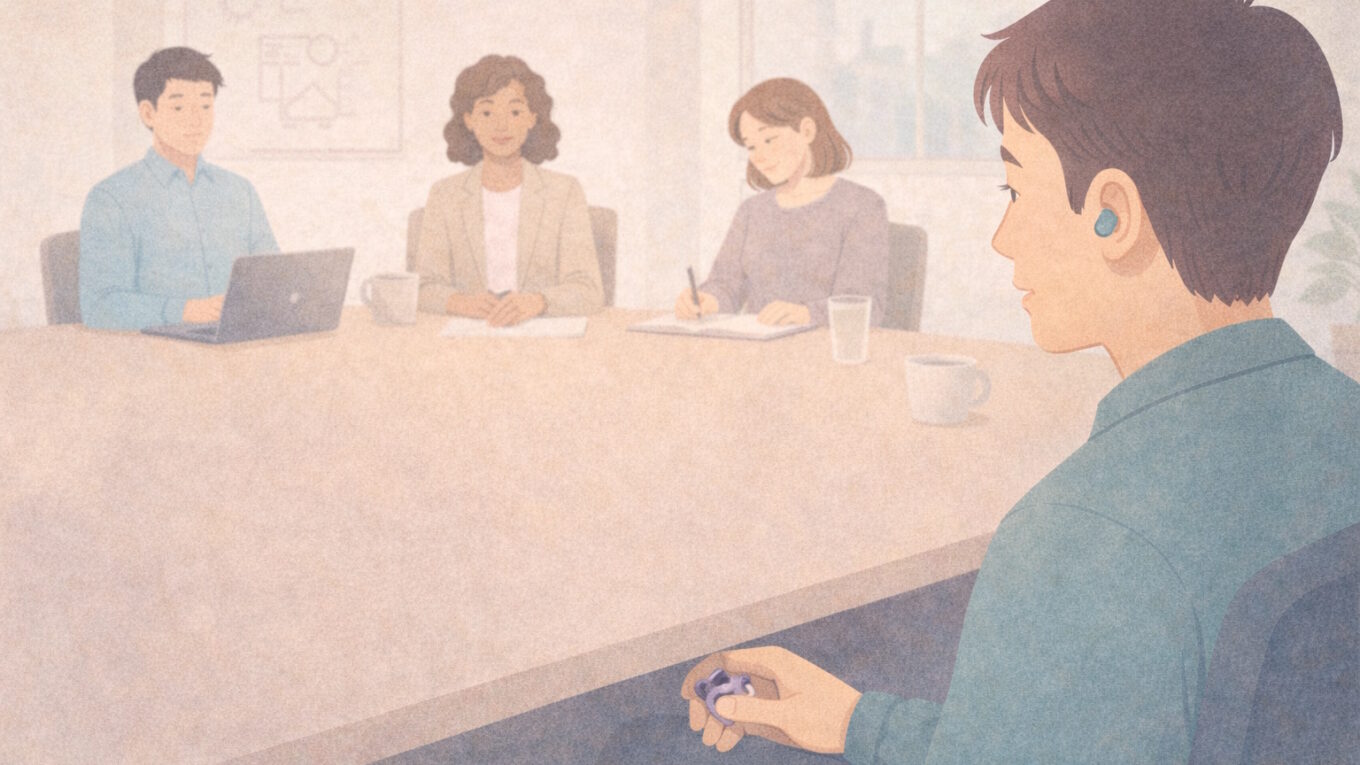
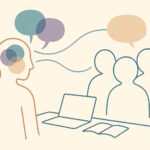
There is a version of you that other people see: polite, competent, making eye contact, smiling, answering questions, coping. You might be the reliable colleague, the friendly parent at the school gates, the person who seems fine in shops or at family gatherings.
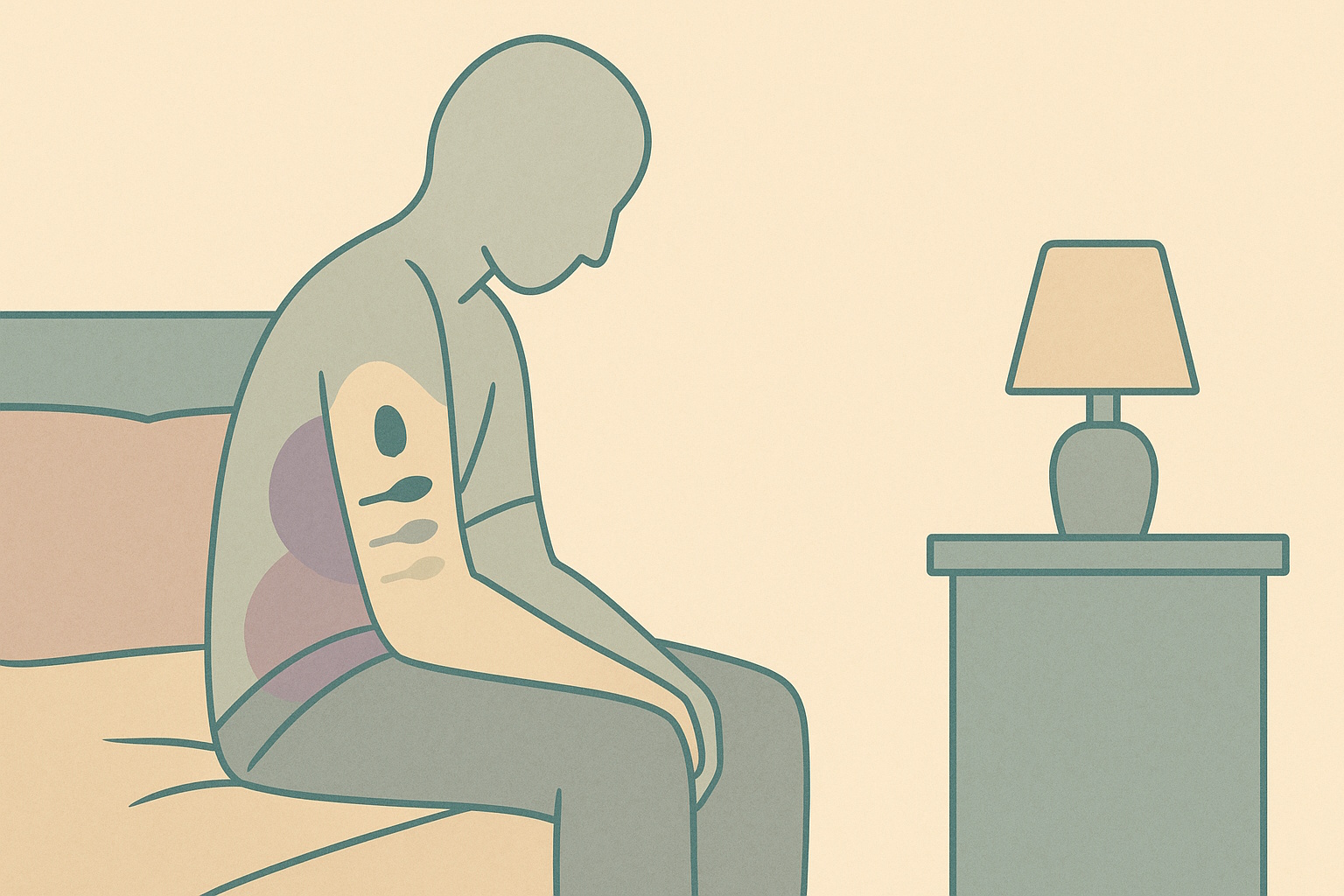
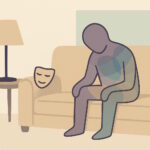
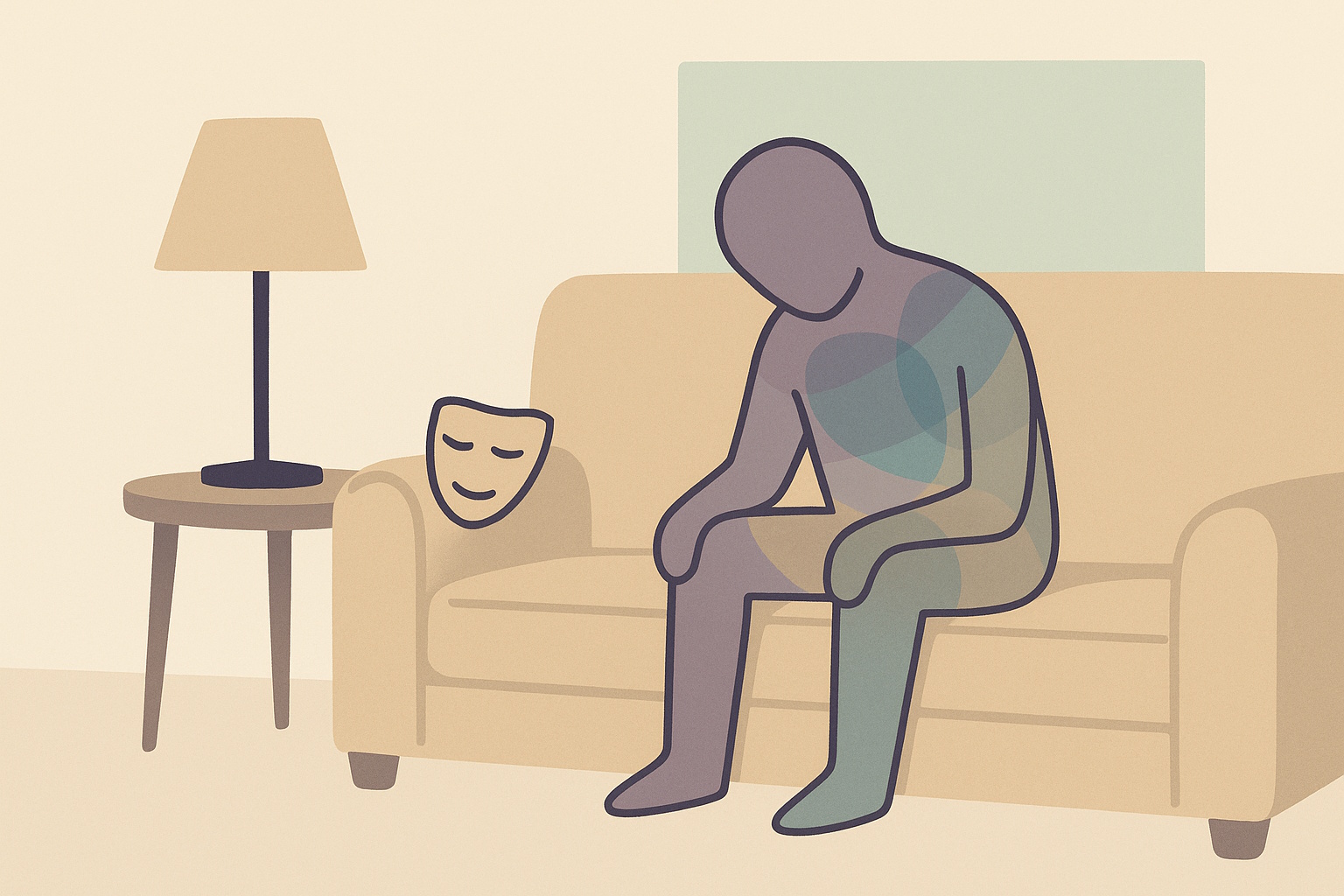
Then there is the version of you that appears when you close the front door. The one who is exhausted, overstimulated, maybe snappy or tearful, maybe numb. The one who lies on the bed scrolling, forgets to eat, or does only the absolute basics because there is nothing left in the tank.
This article is about that gap.
It is about masking – the work of hiding or changing your natural autistic or ADHD traits to fit in – and how, over time, that work can contribute to burnout. It is also about how it feels to quietly fall apart at home while the outside world says you are coping well. I will use my own experience as an autistic adult, but as always, I am not claiming that my way is the way. What helps me may not help you, and that is okay. My hope is that this gives you words and starting points to make sense of your own patterns.
Quick Summary
- Masking means hiding or changing your natural autistic/ADHD traits to appear more “normal” or acceptable. Many of us do it automatically, especially around people we don’t know well.
- Heavy, long-term masking can be a major factor in burnout: deep, ongoing exhaustion and loss of capacity that doesn’t improve with a weekend off.
- Quietly falling apart at home – sleeping too much or too little, neglecting basic needs, shutting down, avoiding people – is often a sign that your public coping is costing more than it gives.
- You don’t have to rip the mask off everywhere at once. Small, safe pockets of unmasking and gentler expectations can make a real difference.
- Everyone’s risks and options are different. You are allowed to protect yourself in unsafe environments and go slowly. Survival is not failure.
What masking looks like in everyday life
Masking is one of those words that can sound abstract until you see it up close. In practice, it is the work you do to make other people more comfortable, even when it pushes your own brain and body past their limits.
For me, masking often looks like:
- forcing eye contact when my natural instinct would be to look away
- preventing myself from stimming, even when my body is begging to move
- rehearsing conversations in my head before they happen, especially with strangers
- smiling and making small talk when I am actually overloaded or anxious
I notice myself masking most around people who do not know me well: extended family who are not aware of my diagnosis, other parents in the school yard, at social events, in shops, in any situation where there are unfamiliar people around. The more uncertain I am about how people will react to the “real” me, the harder I tend to mask.
For a long time, I didn’t have a word for this. I just thought I was doing what everyone does to be polite. It was only when I discussed it with a medical professional that the word “masking” landed in a new way. I realised that what I was doing was not just normal social effort. It was an extra layer of work, on top of everything else, and I had been doing it for years.
Your masking might look different:
- copying other people’s tone or gestures
- forcing yourself to laugh when you don’t find something funny
- scripting texts and emails until they feel “perfect”
- hiding distress, overload or shutdown signs around certain people
The details vary, but the core is the same: you are working hard to appear okay, even when you are not.
Why we learn to mask so hard
Masking doesn’t come out of nowhere. Most of us learn it because, at some point, it kept us safer.
Staying out of trouble and away from bullies
Many neurodivergent people have a history of being told off or mocked for things that were not under their control: stimming, meltdowns, shutdowns, being blunt, missing social cues, needing routine. Over time, we learn that showing our real reactions can lead to punishment or ridicule.
If you grew up with messages like “stop making a fuss”, “why can’t you just be normal”, or “you’re too sensitive”, masking can become a survival strategy. You train yourself to act like whatever the people around you seem to want.
Wanting to be liked, respected, or taken seriously
Most of us do not want to be the “difficult” or “weird” one. We want to be trusted, respected, invited, maybe even liked.
In my case, I have held roles that carry a certain expectation of composure and social ease: working in higher education, being a town councillor in the past, leading Beaver Scouts, being a parent at the school gates. When people picture someone in those roles, “autistic” is not the first word they think of.
It can feel as if you have to prove that you deserve to be there by being extra calm, extra agreeable, extra capable. Masking becomes part of that performance.
Systems built for someone else’s brain
Schools, universities, workplaces and parenting cultures are usually designed around assumptions that fit neurotypical brains better than neurodivergent ones. They expect people to cope with crowds, noise, small talk, rapid changes, multi-tasking and long days without much support.
If the systems will not bend, the pressure often falls on the individual to adapt. Masking becomes the way you squeeze yourself into shapes that the system will accept. It can work for a while. But it is not a cost-free strategy.
The cost of masking: how burnout creeps in
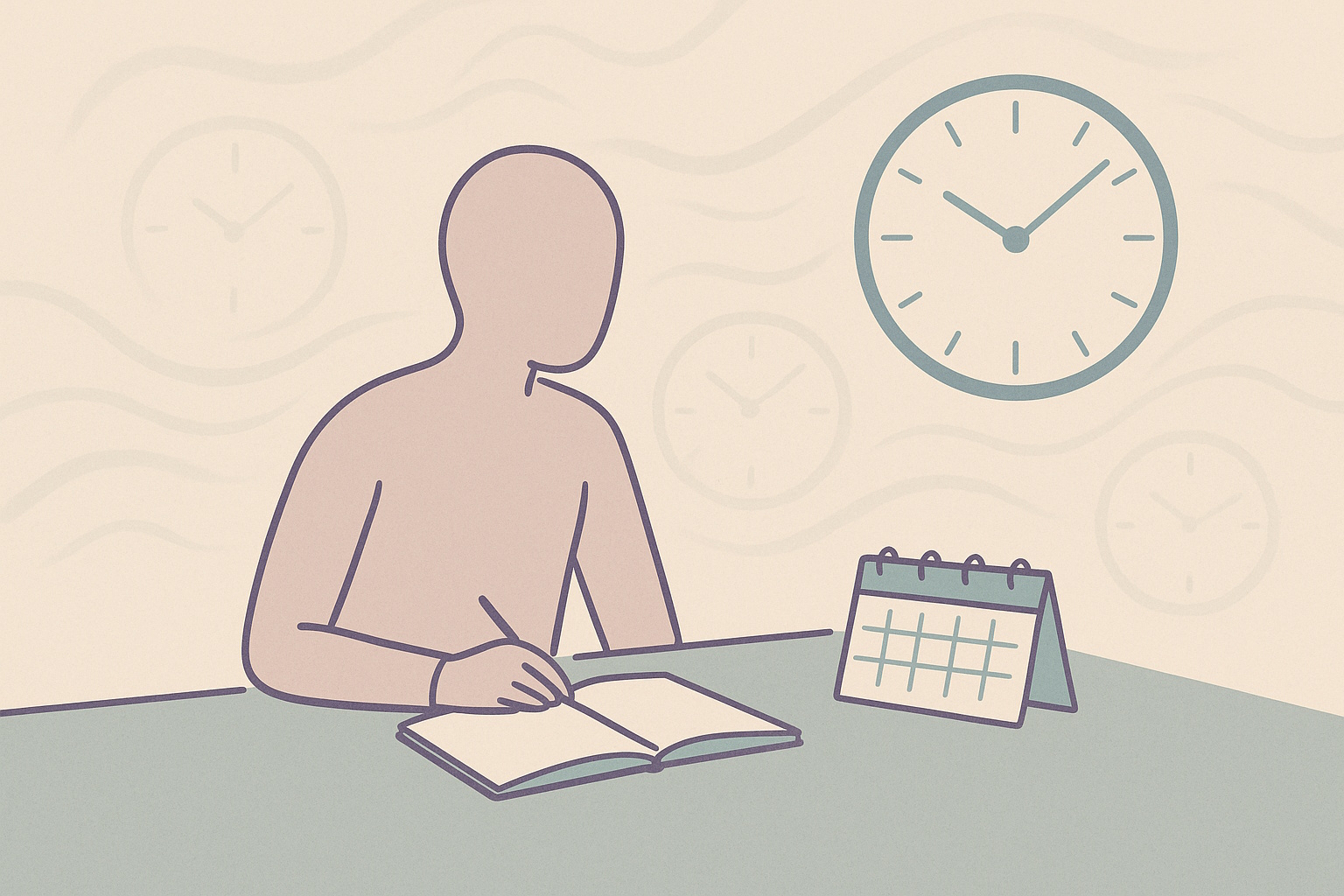
Masking uses energy. So does coping with sensory overload, managing executive function, and juggling work, study, family and community roles. When you stack all of that together, you can end up spending far more energy than you ever get back.
There was a period in my life that, looking back, I would now call burnout. I was working, masking hard, and living largely on my own. One morning, on the way to work, I had a very small, non-fault car accident. In the grand scheme of things it was minor. Nobody was seriously hurt. But my stress levels were already so close to the edge that this small event tipped me over the wall.
I had a meltdown – something that is relatively rare for me as an adult, as I tend more towards shutdown. I “disappeared” at work to have that meltdown, then, when I had recovered enough to function, I went home ill. I am not sure anyone really noticed how close to the edge I was.
At home, I slept a lot. I did not look after myself properly. I did not eat well. I kept going partly because my cats relied on me. That was enough of a thread to hold onto.
Burnout doesn’t always announce itself with a big crash. Sometimes it creeps in slowly, through:
- chronic exhaustion that doesn’t improve with rest
- more frequent shutdowns or “crash days”
- difficulty starting or completing tasks that used to be manageable
- feeling emotionally flat, numb or detached
- losing interest in hobbies or social contact
If you recognise yourself in that, it is not a sign that you are weak. It is a sign that you have been working extremely hard, often invisibly.
What “quietly falling apart” can look like at home
From the outside, you might look fine. You turn up to work, answer emails, chat politely at the school gates, make it through family events.
At home, it can be a very different story.
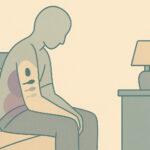
Quietly falling apart might look like:
- collapsing onto the bed or sofa as soon as you get home, unable to do much else
- scrolling or gaming late into the night because you cannot face going to bed and starting another day
- neglecting basic self-care like cooking, showering or tidying
- snapping at people you care about over small things, then feeling guilty and ashamed
- spending weekends in “recovery mode” rather than actually resting or enjoying anything
In my burnout period, my world shrank down to work, collapse, and looking after the cats. There was not much space for anything else. Because I lived alone and was good at masking, very few people saw the full picture.
You might have more demands at home: children, partners, caring responsibilities. That can make it even harder to find space to unravel, which sometimes forces the mask to stay on longer than is healthy. The cost does not vanish; it just gets pushed further inside.
Small ways to unmask safely
If masking has kept you safe for a long time, the idea of “unmasking” can feel frightening. You may not be able to be fully yourself in every environment, especially if there are real risks around work, housing, money or family.
You do not have to choose between “mask everywhere” and “never mask again”. Instead, you can experiment with small, targeted changes in places that feel relatively safe.
Start where it feels safest
Think about where you already have some acceptance. That might be at home, with a partner or children who know you are autistic. It might be with one or two close friends, or in specific online spaces.
For me, home is the place I can be the most unmasked. The people I live with know why I stim, and they know my limitations with social aspects. I do not have to force eye contact there or pretend to enjoy every conversation. That doesn’t mean there is never strain, but it does mean I can let my guard down more than I can in public.
Let your body be a bit more honest
Some ideas that may or may not fit you:
- allowing yourself to stim at home, instead of clamping down on it by default
- wearing clothes that are comfortable rather than “presentable”, at least some of the time
- letting your face rest in its natural expression instead of keeping a social smile on
These are small things, but they send your nervous system the message that it does not have to perform all the time.
Lowering expectations a notch
If your energy is low, it may help to gently lower your expectations of yourself, especially at home. That could look like:
- simplifying meals when you are exhausted, instead of pushing for elaborate cooking
- accepting that some evenings will be “one thing only” evenings, where you do one essential task and then rest
- allowing certain areas of the house to be messier than you would like during hard times
This is not about giving up. It is about recognising that you have been doing a lot of invisible work and allowing yourself to be human.
When you can’t unmask much (yet)
For some people, unmasking even slightly at work, with family, or in community spaces would be unsafe or unwise right now. Maybe your job is precarious, your family is unsupportive, or your living situation leaves little room for honesty.
In those cases, it can help to think in terms of “micro-unmasking” and internal honesty.
Micro-unmasking might include:
- small sensory adjustments that nobody else needs to notice, like ear plugs, softer clothing or dimmer lighting
- one trusted person who knows more of the truth about how you are coping
- being honest with yourself in private writing or thinking, even if you cannot say the same things out loud yet
Survival in a difficult environment is not a moral failure. Sometimes, masking is the least bad option available. If that is you, you deserve compassion, not criticism.
Supporting yourself through burnout
If you recognise signs of burnout – deep exhaustion, loss of capacity, emotional flattening – it may be worth seeking more support. This article is based on lived experience and is not medical advice.
Possible steps could include:
- talking to a GP or mental health professional about how you have been feeling
- exploring whether your workplace, university or community roles can be adjusted, even slightly, to reduce load
- saying no to some social invitations, especially with people you do not know well, even if it is disappointing
- allowing yourself to avoid crowded areas when you know they will push you over your limits
For me, one of the changes that has helped is being more selective with social invitations. I keep them to a minimum unless I know the people well enough to feel relatively safe. It is not ideal – I sometimes wish I could say yes to more – but it protects me from adding even more masking on top of everything else.
If your burnout is severe, if you are struggling to function day to day, or if you are having thoughts about not wanting to be here, please consider reaching out to professional support or crisis services in your area. Quietly Neurodivergent cannot provide crisis support, but you do not have to carry this alone.
A quiet closing thought
Masking is something many of us learned because we had to. It helped us survive childhood, navigate school, get jobs, move through social spaces that were never designed with us in mind. For that, it deserves some respect.
At the same time, the cost of masking can be high. If you find yourself quietly falling apart at home, sleeping odd hours, neglecting your needs, disappearing into shutdown or meltdown, it may not mean you are failing. It may mean you have been doing too much for too long, in too many roles, with too little support.
You do not have to become completely unmasked to deserve rest. You do not have to explain every struggle to every person in your life. You do not have to fix everything at once.
If all you do for now is notice where your mask is heaviest, create one small pocket of safety where you can be more yourself, or allow yourself to say no to one extra demand, that is enough. The work of caring for your quietly neurodivergent brain is real work, even when it happens behind closed doors.
You are not alone if you look fine and feel shattered. Many of us are holding the same tension. You deserve kindness, including from yourself, as you work out what masking and unmasking can look like on your terms.

I’m Andrew, the person behind Quietly Neurodivergent. I’m an autistic adult who spent many years trying to pass as “fine” – holding things together at work, showing up to meetings, hitting deadlines – and then unravelling in private. I know what it feels like to look competent on the outside while running on fumes underneath.
By day I work with student data in higher education; by night (and very early mornings) I’m a part-time PhD student thinking about education, inequality and how people move through systems that were never quite built for them. I’ve also spent nearly ten years as a town councillor and I volunteer as a Beaver Scout Leader, which means I’ve had a lot of practice navigating meetings, forms, responsibilities and sensory/social overload at the same time. That mix of lived experience, community work and research shapes how I write here: practical, plain-English pieces that sit somewhere between “this is what it’s like” and “here are some things you could try”.
I’m not a clinician and I don’t offer diagnosis, therapy or miracle fixes. What I can offer are honest accounts of what has and hasn’t helped me with study, work and everyday life, alongside small, realistic tools you can adapt for yourself. If you recognise yourself in the phrase “quietly neurodivergent”, this site is for you.