Ear Protection for Neurodivergent Brains: When Sound Is Too Much and What You Can Do
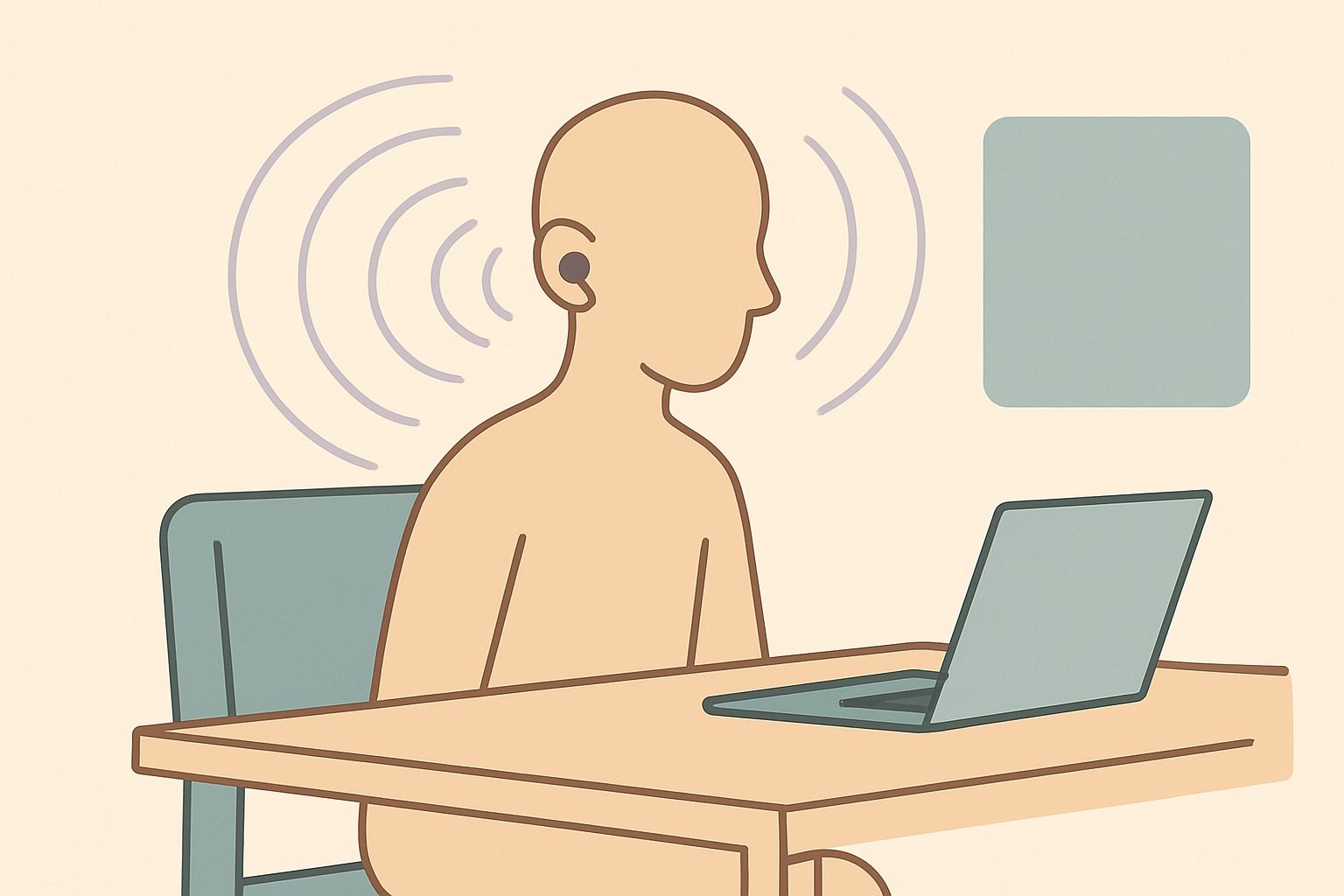
There is a particular kind of tired that comes from sound. Not a single loud bang, but the constant layer of background noise: people chatting, phones going off, chairs scraping, children shouting, a printer humming away in the corner. For many autistic and ADHD people, that background layer isn’t something we can easily tune out. It sits on top of everything else we are trying to do.
For me, sound is usually more distracting and draining than physically painful. In open-plan offices, I can hear everything and everyone. At Beavers, excited shouting can tip me from “fine” into anxious and close to shutdown very quickly.
This article is about ear protection as one of the tools that can help. It isn’t here to say that everyone should use it, or that my way of doing it is the right one. What works for me will not work for everyone, and that’s okay. I’m sharing my own experience as an autistic adult who works full time, studies part time and volunteers with children, in case it gives you a starting point for finding what works for your own brain.
Quick Summary
- Background noise and chatter can be exhausting for autistic and ADHD people, even when it isn’t physically painful.
- Ear protection can reduce stress, anxiety and the risk of shutdown in places like open-plan offices, busy university spaces and loud children’s activities.
- There are many options, including discreet filtered ear plugs and noise-cancelling earbuds, as well as more visible over-ear options.
- I personally prefer small, in-ear options and use them as a coping tool or last resort, not as a way to avoid sound completely.
- Everyone’s sensory system is different. This article describes what helps me; it is not medical advice and it may or may not fit you. Use it as a menu of ideas, not a prescription.
Why background noise can be so hard (even when it doesn’t “hurt”)
When people think about sensory issues and sound, they often imagine physical pain: flinching at sirens or being unable to tolerate fire alarms. That certainly happens for some people.
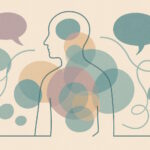
For others, including me, the difficulty is quieter and more constant. Background noise – office chatter, clattering cutlery, overlapping conversations, children yelling different things at once – pulls attention in all directions at once. It is like trying to read a book while three radio stations play at the same time.
In an open-plan office, I am aware of every phone call, every conversation and every laugh. Even if I am not consciously listening, my brain is tracking it. The result isn’t usually pain; it is a gradual build-up of stress, anxiety and exhaustion. If it goes on long enough, I can slide into shutdown: going quiet, losing words, feeling like my brain has hit a wall.
At Beavers, it is similar. When the noise level rises, my nervous system feels like it is being pulled in every direction. Sometimes I can manage by adjusting what we are doing. Other times, I either need to put in ear protection or leave the room briefly.
Not all autistic or ADHD people experience sound this way. Some are more sensitive, some less. Some are bothered by different frequencies or specific types of sound. That’s why there isn’t one “correct” approach to ear protection. There are just tools that you can try and see whether they help your version of sensory overload.
When ear protection might help
Ear protection is one tool among many. You do not have to wait until you are on the edge of meltdown or shutdown to use it. Equally, you do not have to use it all the time.
Here are some situations where it might be worth experimenting with some kind of sound reduction:
Open-plan offices
If you work in an open-plan office, you may recognise:
- constant background chatter and phone calls
- difficulty focusing on a single task
- feeling more tired after a day in the office than a day working somewhere quieter
In this environment, ear protection can help reduce the overall noise level enough that your brain has some spare capacity again. Even a small reduction can make it easier to concentrate and less likely that you will hit shutdown by the end of the day.
Meetings and busy university spaces
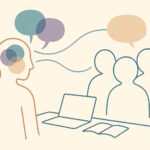
Shared study areas, cafés on campus, and group meetings can have a similar effect. You are meant to follow one conversation, while several others are happening just a few metres away.
Using discreet ear plugs in these situations can take the edge off the background noise while still allowing you to hear the person in front of you. You may find it easier to stay present, rather than drifting in and out because your brain is overwhelmed.
Children’s activities and family events
If you spend time with children – your own, or in roles like Beavers, Scouts, clubs or teaching – you may hit sudden peaks of noise: excited shouting, whistles, chairs scraping, multiple adults giving instructions.
For me, Beavers is where ear protection has made one of the clearest differences. When the noise starts to rise to a level that sends my nervous system into panic, I have two options: step out of the room briefly, or put in ear buds. The second option allows me to keep participating and supporting the children, rather than disappearing entirely.
Some of the neurodivergent or suspected neurodivergent children also struggle with loudness. For them, having the option of ear protection can be the difference between joining in and spending the session distressed or withdrawn.
Everyday public spaces
Shops, trains, buses and waiting rooms can all be unexpectedly loud or echoey. Having ear plugs or earbuds with you gives you the option to soften the sound if you need it.
You might never use them. Or you might find that knowing you could use them lowers your anxiety, even before you put them in.
Types of ear protection (and how they feel)
There is no single “best” kind of ear protection. Different tools suit different people and different situations. What follows is not a shopping list or a set of recommendations, just a description of what I use and why.
Discreet filtered ear plugs
The type I reach for most is a reusable, filtered ear plug: small, soft, and designed to reduce the volume of sound without blocking it completely.
I like these because:
- they are discreet – once they are in, most people do not notice them
- they are physically comfortable for me, unlike over-ear options
- they reduce the level of background noise while still letting me hear voices and important sounds
- they work in both work settings and places like Beavers or shops
On paper, the ones I use say they reduce sound by around 27 decibels. In practice, that means conversations, alarms and other important sounds are still audible, just less harsh and less tiring. I think of them as noise-reducing, not noise-blocking; completely blocking sound all the time would feel unsafe to me.
I own several pairs. This is partly because they are genuinely useful, and partly because I have a habit of leaving them in different bags, jackets and rooms. One practical lesson from this: if you know ear protection helps you, it is worth having more than one pair so you are less likely to be caught without.
Noise-cancelling earbuds
I also use noise-cancelling earbuds. These give more control: you can choose different levels of noise reduction, or turn the noise cancelling off entirely.
I tend to use these when:
- I know a space will be very loud and unpredictable, like certain children’s activities
- I want the option of listening to something (e.g. white noise or gentle music) as well as reducing external sound
The downsides are that they need charging, they can be more noticeable, and you have to be careful to stay safe – for example, not using strong noise cancelling when you need to hear traffic.
Over-ear headphones and defenders
Many people swear by over-ear headphones or ear defenders. They can be very effective at blocking or reducing sound, and they send a clear signal to others that you are not currently available for conversation.
For me, though, they are not a good fit. I dislike the sensation of something over my ears and head, and I prefer not to have something that visually large on my head when I am trying to blend in.
That does not make them bad tools. It simply means they do not suit my sensory profile or preferences. If you like the feel of them, or if you find the visual signal helpful, they may be exactly the right tool for you. We are all different.
The social side: feeling odd, standing out, explaining them
Even if you know ear protection helps, it can still feel uncomfortable to use it in front of other people. You might worry about seeming rude, antisocial or dramatic. I do sometimes feel self-conscious, especially in new environments.
That is one reason I prefer small, in-ear options. They are less visible, which makes it easier for me to use them in meetings or busy rooms without feeling like I am drawing attention to myself.
People do occasionally notice and ask about them. At Beavers, some of the other leaders asked at first, more out of curiosity than anything else. Some of the children have wondered why I wear them. My own children do not fully understand why I need them.
When I explain, I tend to keep it simple. Something like:
- “Loud background noise makes it hard for me to think, so these just soften it a bit.”
- “I’m autistic, and the noise can get overwhelming. This helps me stay calm and join in.”
With children, I might add:
- “Lots of people use ear protection: builders, musicians, people at concerts. My brain just finds noise tiring, so this helps it a bit.”
Some of the neurodivergent children at Beavers are reluctant to use ear protection because they worry it will set them apart from their peers. I understand that. I felt similar as an adult. I try to frame ear protection as a tool, not a sign of weakness: something you can choose to use if it helps, not something you have to explain or justify.
Practical tips (from getting it wrong)
Most of what I know about using ear protection has come from trial and error, including a fair amount of forgetting to bring it.
A few small tips that might help:
- Have more than one pair. If ear protection helps you, consider keeping pairs in different places – your work bag, your coat, your desk, your car. That way, forgetting one set doesn’t leave you completely without options.
- Learn what level works for you. You might find that reducing sound a bit is enough, rather than blocking as much as possible. You can experiment with different filters or settings.
- Combine it with other supports. Ear protection works best for me when I also build in short breaks away from noisy spaces and pay attention to other sensory load (like lighting and screen brightness).
- Normalise it around children. If you’re a parent or leader, you can model using ear protection yourself and present it as a normal tool. “We use helmets on bikes, ear protection in loud places.” Some children will still say no, and that is okay.
None of this is about doing it “properly”. It is about giving yourself permission to treat sound as something you are allowed to manage, rather than something you have to endure in silence.
Where to draw the line: sound, safety and not living in a bubble
I think of ear protection as a coping tool and, often, as a last resort. I do not aim for constant silence. For me, total silence would be another kind of strain.
Some exposure to everyday background noise can help me “detune” a bit over time, as long as it is within what my nervous system can tolerate. Other people will have different needs. Some may need much more protection, some much less. There is no single right level.
There are also safety considerations. Strong noise reduction is not a good idea when you need to be fully aware of your surroundings. For everyday life, I prefer ear protection that reduces sound rather than blocking it completely.
As a personal rule, I avoid using noise-cancelling earbuds or heavy sound reduction when:
- cycling
- driving
- walking near busy roads or crossing streets
In those situations, being able to hear traffic, alarms and people is more important than reducing sensory load.
If sound regularly causes you physical pain, ringing ears, hearing changes or extreme distress, it may be worth talking to a GP or audiologist. This article is based on my lived experience, not medical training, and it cannot tell you what is safe or healthy for your particular ears.
A quiet closing thought
Needing ear protection does not make you weak, dramatic or “too sensitive”. It makes you a person whose sensory system is working differently from the assumed norm.
I work full time, study part time as a PhD student, have a family with children, and volunteer as a Beaver Scout Leader. There are many areas of life where I manage quite a lot. There are also evenings where I sit in the car outside a loud building, put in ear protection and take a breath before going in.
What helps me – discreet filtered plugs, noise-cancelling earbuds, using them as a coping tool rather than all day every day – might not be what helps you. That is not a problem. You are allowed to explore different tools, decide what feels comfortable, and change your mind over time.
If this article gives you one small idea – to try a particular type of ear plug, to keep a spare pair in your bag, to feel a bit less strange about needing support with sound – that is enough. Your goal is not to become someone who “doesn’t need” ear protection. Your goal is to have a life that is a little less exhausting for your quietly neurodivergent brain.

I’m Andrew, the person behind Quietly Neurodivergent. I’m an autistic adult who spent many years trying to pass as “fine” – holding things together at work, showing up to meetings, hitting deadlines – and then unravelling in private. I know what it feels like to look competent on the outside while running on fumes underneath.
By day I work with student data in higher education; by night (and very early mornings) I’m a part-time PhD student thinking about education, inequality and how people move through systems that were never quite built for them. I’ve also spent nearly ten years as a town councillor and I volunteer as a Beaver Scout Leader, which means I’ve had a lot of practice navigating meetings, forms, responsibilities and sensory/social overload at the same time. That mix of lived experience, community work and research shapes how I write here: practical, plain-English pieces that sit somewhere between “this is what it’s like” and “here are some things you could try”.
I’m not a clinician and I don’t offer diagnosis, therapy or miracle fixes. What I can offer are honest accounts of what has and hasn’t helped me with study, work and everyday life, alongside small, realistic tools you can adapt for yourself. If you recognise yourself in the phrase “quietly neurodivergent”, this site is for you.
Discover more from Quietly Neurodivergent
Subscribe to get the latest posts sent to your email.