Thinking About an Autism or ADHD Assessment When the World Is Shouting About “Overdiagnosis”
If you spend any time near the news or social media at the moment, you’ll have seen people saying that autism and ADHD are being “overdiagnosed”, or that people are chasing labels to get easy access to benefits.
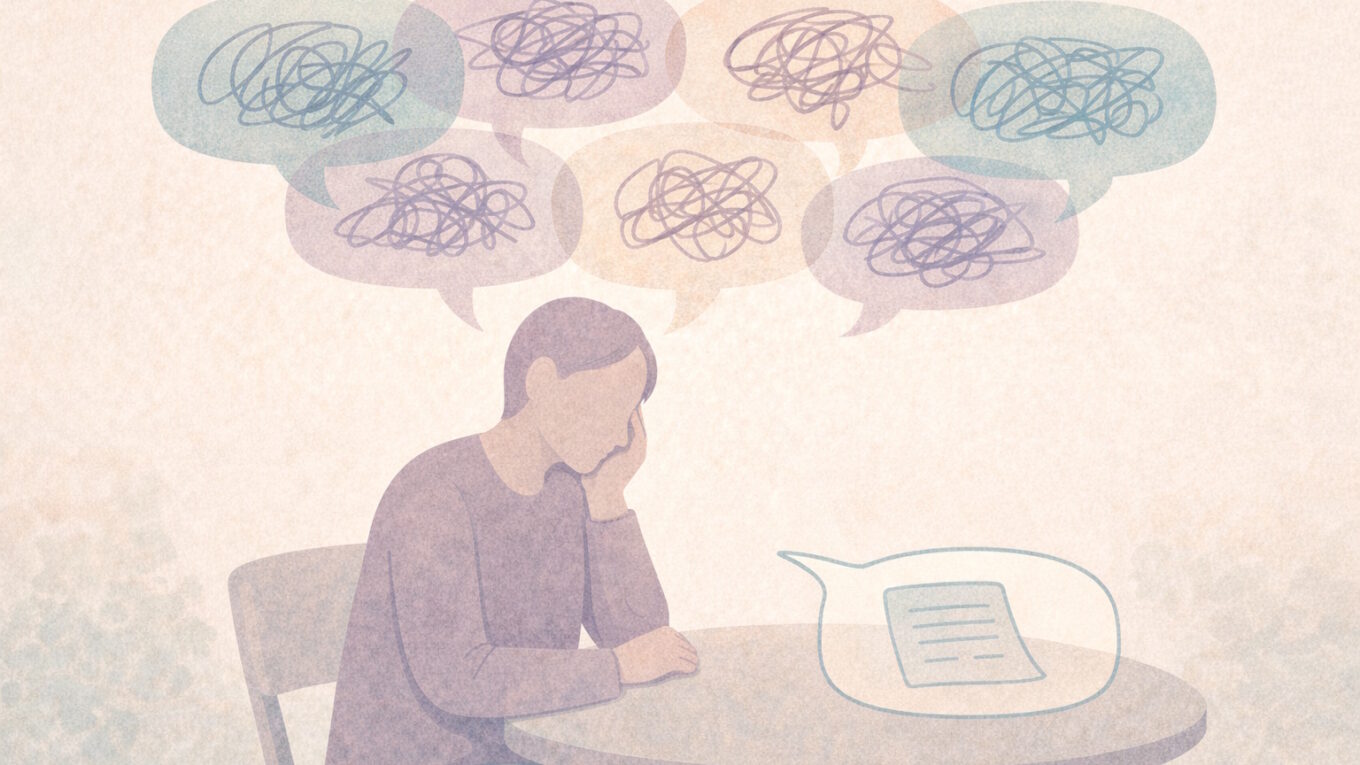
If you’re quietly wondering whether you might be autistic, ADHD, or otherwise neurodivergent, that noise can hit hard.
You might find yourself thinking things like:
- “What if I’m just jumping on a trend?”
- “What if they think I’m in it for the money?”
- “Do I really deserve help, or am I just making excuses?”
I recognise some of those doubts in myself. I went for an autism diagnosis for personal reasons: to explain a lifetime of feeling out of step, to understand my own brain, and to be more honest with the people around me. I don’t receive extra money because of it. I don’t have a secret comfortable cushion from the state. What I have are a few adaptations that, on good days, help to level things up a little.
This article is for people who are thinking about approaching the NHS, or another service, for an autism or ADHD assessment but are feeling put off by the current political climate. It’s not medical advice, and I can’t tell you whether you “should” seek a diagnosis. What I can do is offer context, language and reassurance so you can make that decision from a place of self-respect rather than shame.
Quick Summary
- The loud public conversation about “overdiagnosis” can make genuinely neurodivergent people doubt themselves and feel guilty for seeking help.
- Wanting an assessment for understanding, clarity and appropriate support is valid, even if you never apply for benefits.
- Autism and ADHD are differences that can become disabilities in environments that don’t fit us; asking for adjustments is about levelling the playing field, not getting an easy ride.
- Some people do need financial support or formal accommodations to survive. That doesn’t make them fakers, and it doesn’t make your needs less real if you don’t claim anything.
- If you’re thinking about seeking an assessment, you’re allowed to take your own struggles seriously, to ask questions, and to look for professionals who will treat you with respect.
The noisy story versus your quiet reality
A lot of public discussion at the moment focuses on big, sweeping stories:
- “Everyone’s autistic these days.”
- “It’s just a social media trend.”
- “People are gaming the system for benefits.”
Those stories are attention-grabbing, but they leave out the quieter reality:
- people who have struggled for decades without words for why
- people who burn out repeatedly in work, study or family life
- people who are simply trying to understand themselves and function better
It’s easy to absorb that outside suspicion and turn it inwards.
You might think:
- “Maybe I’m exaggerating.”
- “Other people have it worse; I shouldn’t take up space.”
- “What if the GP thinks I only want a label for money or special treatment?”
The truth is: you know your own life better than any commentator, politician or newspaper column. They don’t see your daily effort, your shutdowns and meltdowns in private, your constant masking, your exhaustion after doing things other people find easy.
Those are the realities that matter when you’re deciding whether to seek an assessment, not the headlines.
“There was no autism in my day”: visibility isn’t the same as existence
Another story that often appears alongside “overdiagnosis” is the idea that autism and ADHD are somehow new:
- “There was no autism in my day.”
- “We just got on with it.”
- “In my school there were no autistic kids.”
What usually wasn’t there in those days was the language, not the people.
Many autistic and ADHD adults who grew up decades ago recognise ourselves in what was said about us at the time:
- “the weird one”
- “the oddball”
- “too sensitive”
- “lazy but clever”
- “could do well if they just applied themselves”
Some of us were bullied. Some of us were punished for things we genuinely couldn’t help. Some of us were misdiagnosed with other conditions, or told our struggles were just bad attitude, bad parenting or bad character.
So when people say “there was no autism in my day”, what they often mean is:
“In my day, we didn’t have a name for it, and we didn’t see the full picture.”
Greater awareness now doesn’t create autism or ADHD out of thin air. It makes it more likely that people who have always been autistic or ADHD are recognised, rather than written off as difficult, odd or lazy.
If you grew up as the “weird” kid, the “too much” colleague, the exhausted adult who couldn’t understand why life seemed harder for you than for everyone around you, it’s understandable to feel angry or sad when people claim autism is suddenly fashionable.
You’re not imagining things. The label may be newer in public conversation. Your brain, and the way it has always worked, is not.
“We’re all on the spectrum somewhere” and other minimising phrases
If you’ve ever tried to talk about being autistic or ADHD, you may have heard things like:
- “We’re all on the spectrum somewhere.”
- “Everyone’s a bit ADHD these days.”
- “All of us struggle with that sometimes.”
Often these comments are meant kindly. The person is trying to say “you’re not strange” or “you’re not alone”. But in practice, they can flatten very real differences and make it harder to take your own struggles seriously.
When someone says “we’re all on the spectrum”, they are usually talking about personality traits – being shy, liking routine, getting absorbed in a hobby. Autism is not just a collection of quirky traits. It is a different way of processing the world that shapes how you experience sensory input, communication, energy, stress and change.
In the same way, “everyone loses their keys” is not the same as living with ADHD-level executive function difficulties that affect your work, your finances, your education and your self-esteem over years.
You don’t have to argue with people who say these things. But you also don’t have to absorb their message. You are allowed to recognise that your difficulties are more frequent, more intense or more wide-reaching than the occasional struggles they are describing.
If you want a gentle response, you could say something like:
“It’s true everyone has off days, but this has been a consistent pattern for me over many years. That’s why I’m looking into whether there might be an underlying reason.”
Or you can simply hold your ground internally: knowing that other people’s discomfort with difference doesn’t make your reality any less real.
Difference, disability and “deficit”
There’s a real tension in the language here.
On one hand, many of us experience autism or ADHD as a difference: a different way of processing the world, with real strengths as well as difficulties.
On the other hand, those differences can become a disability in practice when the environment doesn’t fit:
- noisy open-plan offices
- constantly changing expectations
- forms and systems that assume certain executive-function skills
- social rules that rely on reading unspoken signals
For me, this is where the social model of disability is helpful. Very simply:
- my brain is different
- the world is mostly built for a different kind of brain
- the clash between the two creates barriers
That doesn’t mean I am a deficit as a person. It means that, without adjustments, I am at a disadvantage in certain contexts.
So when I ask for:
- clearer instructions
- written follow-up after meetings
- some flexibility around sensory load or communication
I’m not asking to be treated as helpless. I’m asking for the environment to meet me halfway so I can use my strengths without constantly running on empty.
Why people really seek diagnosis
People go for autism or ADHD assessments for all sorts of reasons. A few common ones:
- to make sense of a lifetime of struggle, burnout, or feeling “too much” and “not enough” at the same time
- to understand why work, school, relationships or daily life have felt harder than they seem to for other people
- to be kinder to themselves, once they realise it isn’t just “laziness” or “being weird”
- to have language that helps them ask for reasonable adjustments at work or in education
- to access support or treatment that is only available with a formal diagnosis
- sometimes, yes, to access benefits they are legitimately entitled to, because their difficulties really do affect their ability to work or cope
Wanting any of those things does not make you greedy, manipulative or weak.
In my own case, the main reasons were:
- understanding why I had repeated burnout episodes
- being able to explain to employers and colleagues how I work
- making better sense of my past, including some hard moments I’d blamed myself for
The outside world might reduce diagnosis to money or “labels”. For most of us, it’s about clarity, language and not feeling like a broken neurotypical.
A note on bad-faith diagnosis
It’s important to be direct about one thing.
If someone is considering pursuing a diagnosis purely to game the system – with no real day-to-day difficulties, no history of struggle, and no intention of being honest about their experience – this article is not written for them.
Benefit systems are already hard enough to navigate for people who are genuinely disabled or chronically overwhelmed. Bad-faith applications add fuel to the suspicion and gatekeeping that make it harder for everyone else to be believed.
That doesn’t mean anyone has to be perfect or have a dramatic story to “deserve” support. It just means that assessment and diagnosis work best when people come to them in good faith, trying to describe their reality as accurately as they can.
If you are reading this because you’re exhausted, confused, and trying to understand why life has felt so hard for so long, you are not in that bad-faith group.
“I’m not in it for the money” – and what if someone is?
The current political chatter can make it sound as if seeking a diagnosis is mainly a sneaky route to easy benefits. For the vast majority of people, that simply isn’t the story.
Many of us:
- waited years, or decades, to even raise the possibility of autism or ADHD
- had to push through our own doubt and shame to ask for an assessment
- would still be exactly as autistic or ADHD if the benefit system vanished tomorrow
It’s okay to say, plainly:
“I’m not doing this for money. I’m doing it because I need to understand and support myself better.”
At the same time, it’s important to say this too:
Some people genuinely need financial support because their neurodivergence makes paid work or full-time work impossible or unstable.
That doesn’t make them scammers. It means the current setup of work, benefits and support doesn’t fit their needs without that extra help.
You don’t have to be on benefits to be “autistic enough”. And if you do ever need benefits or formal accommodations, that doesn’t make your diagnosis less real or your motives suspect.
The fear of “not being autistic or ADHD enough”
A lot of us go into assessment terrified that we’re wasting everyone’s time.
Thoughts like:
- “What if they tell me I’m fine and I’ve imagined it all?”
- “What if I’m just lazy?”
- “What if I’m copying social media?”
These fears are understandable, especially when public voices are loudly questioning whether autism and ADHD are being overdiagnosed.
A few gentle reminders:
- Wanting an assessment doesn’t automatically mean you’ll get one. Professionals still use criteria, tools and clinical judgement.
- If you don’t meet criteria, it doesn’t mean you’ve lied. It means something else might be going on that is also worth understanding.
- If you do meet criteria, that doesn’t suddenly make you less “you” or more fragile. It gives a name to what was already there.
You are allowed to seek information about your own brain. That is not selfish. It is part of looking after yourself.
If you’re thinking about approaching the NHS (or another service)
Processes and waiting times vary a lot by area and over time, so this is deliberately broad.
If you’re in the UK and considering an assessment, you might:
- Notice patterns over time.
Make a few notes on things like masking, burnout, sensory issues, executive function, and your school or work history. Not to “prove” anything, but to help you talk about specifics. - Talk to your GP or relevant clinician.
You don’t have to have perfect words. It’s okay to say something like:
“I’ve been reading about autism/ADHD in adults and a lot of it matches my experience. I’d like to talk about whether an assessment might be appropriate.” - Expect mixed reactions.
Some GPs are very understanding; others are more sceptical. Their reaction doesn’t define your worth or the validity of your struggles. - Consider trusted people.
A partner, friend or family member who knows you well might be able to give supporting examples or simply sit with you while you raise it.
It’s also okay if you decide not to pursue diagnosis right now. You might still benefit from ND-friendly strategies for routines, sensory support, planning and communication. Diagnosis is one tool among many, not a moral test.
What a diagnosis can and cannot do
A formal diagnosis can:
- give you language for your experiences
- help you access some kinds of support
- make it easier to explain needs at work or in education
- validate that you haven’t “just been lazy” all these years
It can’t:
- magically fix your environment
- guarantee that every workplace or service will suddenly understand
- turn you into a different person overnight
- remove all doubt, forever
For me, diagnosis sits alongside other things: self-knowledge, boundaries, small tools and accommodations. It helped me stop fighting my brain quite so hard and start working with it.
A quiet closing thought
The current political climate can make it feel as if seeking an autism or ADHD assessment is something slightly shameful, like you’re trying to get away with something.
From where I sit, that story is upside-down.
Most of the neurodivergent people I know aren’t chasing an easy life. They are exhausted from years of trying to keep up in a world that wasn’t built with them in mind. They want understanding, not loopholes. They want a fair chance to contribute, not a free pass to opt out of everything.
If you are thinking about approaching the NHS or another clinic, you are allowed to want clarity. You are allowed to want language. You are allowed to want support that fits your actual brain, whether that ends up including benefits or not.
You don’t have to justify your existence to commentators who’ve never met you.
If this article gives you permission to book one appointment, start one conversation, or simply move your internal slider from “I’m just making excuses” a little closer to “my struggles are real and worth taking seriously”, that’s enough.
Whatever you decide about assessment, you are not alone, and you are not wrong for wanting your life to be more liveable.
I’m Andrew, the person behind Quietly Neurodivergent. I’m an autistic adult who spent many years trying to pass as “fine” – holding things together at work, showing up to meetings, hitting deadlines – and then unravelling in private. I know what it feels like to look competent on the outside while running on fumes underneath.
By day I work with student data in higher education; by night (and very early mornings) I’m a part-time PhD student thinking about education, inequality and how people move through systems that were never quite built for them. I’ve also spent nearly ten years as a town councillor and I volunteer as a Beaver Scout Leader, which means I’ve had a lot of practice navigating meetings, forms, responsibilities and sensory/social overload at the same time. That mix of lived experience, community work and research shapes how I write here: practical, plain-English pieces that sit somewhere between “this is what it’s like” and “here are some things you could try”.
I’m not a clinician and I don’t offer diagnosis, therapy or miracle fixes. What I can offer are honest accounts of what has and hasn’t helped me with study, work and everyday life, alongside small, realistic tools you can adapt for yourself. If you recognise yourself in the phrase “quietly neurodivergent”, this site is for you.